
Lake Manyara National Park Where Is Located. Lake Manyara National Park is situated in northern Tanzania, along the western side of the Great Rift Valley. It lies near the town of Mto wa Mbu and is a popular stop for travellers exploring the northern safari circuit.
The park sits beneath the impressive Manyara Escarpment, whose steep slopes create a spectacular backdrop for the lake, forests, and surrounding plains.
According to Tanzania National Parks (TANAPA), the park covers approximately 648.7 square kilometres, including the lake. Its landscapes range from lakeshore wetlands to forested areas and elevated terrain near the escarpment.
The park is approximately 125 kilometres from Arusha by road, with the journey commonly taking around two to two and a half hours in suitable road conditions. Travel time can vary depending on traffic, weather, and the exact destination.
The main entrance is close to Mto wa Mbu, making the park relatively convenient for visitors travelling from Arusha towards Ngorongoro and Serengeti.
Travellers can reach Lake Manyara by road in a private safari vehicle or through an organised safari package. Flights to the nearby Manyara airstrip may also be available through scheduled or charter services, depending on the itinerary.
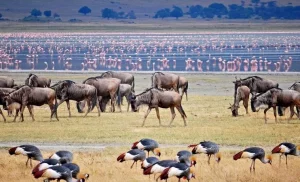
Lake Manyara stands out because of the remarkable variety of habitats found within the park. Rather than offering only open savannah, it combines forests, wetlands, woodland, grassland, and a seasonal alkaline lake.
This diversity supports a wide range of animals and birds while creating beautiful scenery throughout the year.
Some of the park’s most distinctive features include:
These attractions make Lake Manyara an excellent destination for both wildlife viewing and landscape photography.
One of Lake Manyara National Park’s best-known attractions is its tree-climbing lions. Unlike the lions most visitors imagine resting on open grassland, some lions in this park climb into the branches of trees and spend long periods resting above the ground.
Visitors may see lions lying along sturdy acacia branches, watching their surroundings or seeking a comfortable place to rest.
The exact reason for this behaviour is not fully established. Possible explanations include avoiding insects, escaping ground-level discomfort, and taking advantage of shade or breezes.
Although the lions are a major attraction, sightings are never guaranteed. Their location and behaviour change throughout the day, so patience and the guidance of an experienced safari guide are important.
For wildlife enthusiasts, finding a lion resting in a tree can be one of the most memorable moments of a Lake Manyara safari.
The lake itself is another major highlight. It is a shallow, alkaline lake whose appearance changes with rainfall, evaporation, and seasonal water levels.
During suitable conditions, flamingos gather along the lake’s shores to feed on algae and other tiny organisms. Their pink plumage can create a striking contrast against the pale shoreline and the blue or grey water.
The lake also attracts a variety of other waterbirds, including pelicans, storks, herons, and spoonbills.
Bird numbers and the distribution of flamingos vary with water levels and food availability. Visitors should therefore treat large flamingo gatherings as a seasonal possibility rather than a guaranteed sight.
Even when flamingos are less numerous, the lake remains an important part of the park’s scenery and ecological diversity.
Near the park entrance, visitors encounter a lush groundwater forest that contrasts sharply with the drier landscapes found elsewhere in northern Tanzania.
The forest is supported by underground water sources flowing from the surrounding highlands and escarpment. Its tall trees, thick vegetation, and shaded pathways create a cool environment for wildlife.
The forest is home to blue monkeys, olive baboons, bushbuck, and numerous bird species. Visitors may see monkeys moving through the canopy while baboons gather beside the road or search for food on the forest floor.
This area is especially appealing to photographers who enjoy capturing wildlife in a green, enclosed setting rather than the open grasslands commonly associated with African safaris.
The Great Rift Valley Escarpment provides one of the most impressive natural backdrops in Lake Manyara National Park.
Its steep slopes rise above the lake and surrounding plains, creating dramatic views across the valley. The changing colours of the cliffs, vegetation, and distant landscape are particularly attractive in the early morning and late afternoon.
The escarpment also contributes to the variety of habitats found in and around the park.
Visitors can enjoy scenic viewpoints during their journey, while the contrast between the cliffs and the lakeshore makes the area a rewarding destination for landscape photography.
Maji Moto, meaning “hot water” in Swahili, refers to the park’s geothermal hot springs.
Located in the southern part of the park, these springs are associated with the volcanic and tectonic activity of the Great Rift Valley. Hot water rises through the ground, creating mineral-stained surfaces and unusual natural features.
The springs provide a fascinating reminder that Lake Manyara is not only a wildlife destination but also a landscape shaped by powerful geological processes.
Visitors should observe the springs from designated safe areas and follow park guidance, as the water can be dangerously hot.
The wetlands and hippo pools offer another opportunity to appreciate the park’s wildlife.
Hippopotamuses spend much of the day resting in water to keep their bodies cool and protected from the sun. They may become more active when conditions are cooler, particularly around the evening.
The surrounding wetlands attract birds such as herons, storks, and other water-dependent species.
These habitats are important for maintaining the ecological balance of the park, providing food and shelter for wildlife throughout changing seasons.
Lake Manyara National Park supports a wide range of mammals, reptiles, and birds. Its mixture of habitats allows different species to thrive in different parts of the park.
Elephants are among the most impressive animals visitors may encounter. They can be seen feeding on vegetation, moving through woodland, or gathering in family groups.
Lake Manyara is particularly well known for its elephants, and observing these intelligent animals at close range from a safe position in a safari vehicle can be a memorable experience.
African buffaloes are commonly associated with grassland, woodland, and wetland habitats. They may be seen grazing in open areas or resting in groups.
Their powerful build and distinctive horns make them fascinating subjects for wildlife photography.
Giraffes browse on leaves from trees and shrubs, especially in the park’s woodland areas. Their height and graceful movements make them easy to recognise during a game drive.
Zebras and wildebeest may be encountered on open grasslands and floodplains. These grazing animals contribute to the park’s diverse wildlife community and provide opportunities for observing natural behaviour.
Hippos are associated with the lake margins, pools, and wetlands. They spend much of the day in water and may emerge to graze when conditions are cooler.
Visitors should never approach hippos on foot or leave their vehicle outside designated areas.
Primates are particularly noticeable in Lake Manyara’s groundwater forest.
Olive baboons often travel in large troops and may be seen beside roads or feeding in clearings. Blue monkeys tend to spend more time in the trees, moving through the forest canopy in search of food.
Visitors should never feed these animals, even if they appear comfortable around people. Feeding wildlife can encourage aggressive behaviour and harm the animals.
Leopards also inhabit the park, although their secretive behaviour and preference for cover can make sightings difficult. Other predators may be present as well.
As with any safari destination, seeing a particular animal depends on the time of year, habitat conditions, and luck.
Lake Manyara is one of Tanzania’s rewarding birdwatching destinations, with more than 400 bird species recorded according to TANAPA information.
The park’s forests, wetlands, woodland, and alkaline lake support an impressive range of resident and migratory birds.
Birdwatchers may look out for:
The best birdwatching experience depends partly on the habitats visited and the season. Migratory species can increase bird diversity during particular months, while changing lake levels influence the number and distribution of waterbirds.
Binoculars and a camera with a suitable zoom lens can greatly improve the experience.
Lake Manyara is an excellent destination for dedicated birdwatchers, but it is equally enjoyable for visitors who simply want to appreciate the colour, movement, and sounds of Tanzania’s birdlife.
A game drive is the main activity for most visitors. Travelling in a safari vehicle with a knowledgeable guide allows you to explore different habitats while looking for elephants, lions, giraffes, buffaloes, and other wildlife.
A guide can also help identify birds, explain animal behaviour, and point out details that might otherwise be missed.
Early morning and late afternoon drives can be rewarding because temperatures are often cooler and some animals are more active.
The canopy tree walkway offers a different perspective on the park’s forest environment. Visitors can walk above the forest floor and observe the surrounding vegetation, birds, insects, and monkeys from an elevated position.
It is a particularly interesting activity for families, nature enthusiasts, and travellers who want something beyond a traditional vehicle-based safari.
Availability, operating arrangements, and any additional charges should be confirmed with park authorities or your safari operator before travelling.
Birdwatching can be enjoyed during a game drive or at suitable lakeshore and wetland locations.
Visitors can observe waterbirds near the lake, forest species in the groundwater forest, and other birds in open woodland.
A guide with birdwatching experience can help identify species by their calls, colours, flight patterns, and feeding behaviour.
Lake Manyara offers a variety of photography opportunities, from close views of elephants and tree-climbing lions to sweeping landscapes of the Rift Valley Escarpment.
The forest provides opportunities for photographing primates and birds, while the lake and wetlands are ideal for capturing waterbirds and changing light.
For the best results, carry a camera with a zoom lens, protect your equipment from dust and moisture, and avoid disturbing animals to obtain a photograph.
Depending on park facilities and current regulations, visitors may be able to enjoy a picnic at an approved site.
A break allows travellers to relax, enjoy the surroundings, and take in the atmosphere of the park.
Always follow the instructions of your guide and park authorities. Keep food securely stored and never feed wild animals.
The area around Mto wa Mbu provides opportunities to learn about local livelihoods, food, agriculture, crafts, and community traditions.
A guided cultural visit can complement a wildlife safari by helping visitors understand how communities live and work in the wider Lake Manyara landscape.
Choose responsible experiences that respect local customs, explain activities honestly, and ensure that community members benefit fairly from tourism.
Lake Manyara can be visited throughout the year, but the best time depends on your priorities.
The dry season is often a popular time for general wildlife viewing.
Lower rainfall can make some roads easier to navigate, and vegetation may be less dense in certain areas. These conditions can help visitors spot animals moving through woodland and open habitats.
This period is particularly suitable for travellers who want to combine Lake Manyara with other northern Tanzania parks.
However, lake levels and bird concentrations still vary, so the dry season does not guarantee large flamingo gatherings.
The short rains can bring fresh greenery and attractive scenery to the park.
Birdwatching may be rewarding, and the changing landscape can provide excellent photographic opportunities. Rainfall may be intermittent, although weather conditions vary from year to year.
Visitors should be prepared for occasional showers and possible changes to road conditions.
These months can offer a mix of relatively dry conditions and seasonal bird activity, although conditions vary.
They can be a useful option for travellers planning a wider northern circuit safari. As always, the best experience depends on recent rainfall, lake levels, and the movement of wildlife.
The long-rains period generally brings heavier rainfall and lush vegetation.
The park can look especially green and beautiful, and birdlife may be rewarding. However, muddy or difficult roads and wet weather can affect travel plans.
This season may appeal to visitors who prefer greener scenery and are comfortable with less predictable weather.
Overall recommendation: June to October is a strong general choice for a classic wildlife safari, while other months can also be rewarding for scenery and birdwatching. If seeing flamingos is a priority, ask about current lake conditions and recent bird sightings before booking.
Road travel is the most common way to reach the park.
From Arusha, the drive generally takes around two to two and a half hours under favourable conditions. Many visitors travel through the Mto wa Mbu area before entering the park.
A private safari vehicle provides flexibility to stop for sightseeing and combine the visit with other destinations.
Depending on the season and itinerary, visitors may be able to use scheduled or charter flights to a nearby airstrip.
Air transfers can reduce road travel time, particularly for travellers connecting Lake Manyara with other safari destinations. Transfers between the airstrip, accommodation, and park must be arranged in advance.
Lake Manyara is frequently included in itineraries that also feature Tarangire National Park, Ngorongoro Crater, and Serengeti National Park.
Its location makes it a convenient stop between other destinations, while its varied habitats provide a different experience from the open plains of the Serengeti.
Visitors can choose from several types of accommodation, depending on their budget, preferred comfort level, and travel plans.
Luxury properties in the wider Lake Manyara area may offer spacious rooms or tented suites, meals, personalised service, and scenic views of the surrounding landscape.
These options suit honeymooners, photographers, and travellers seeking a comfortable safari experience.
Mid-range lodges provide a balance between comfort and cost. They may offer private rooms, restaurants, gardens, and organised safari activities.
Some are located near Mto wa Mbu, while others are positioned in the surrounding highlands or escarpment area.
Budget accommodation may include simple guesthouses, campsites, and other basic facilities in the surrounding area.
These options can suit independent travellers and visitors who prefer to spend more of their budget on safari activities.
Your choice should depend on whether you want to enter the park early, enjoy views of the Rift Valley, explore nearby communities, or continue to another national park.
Confirm the location of your accommodation carefully. Staying near the park entrance is not the same as staying inside the national park, and transfer times can affect your daily schedule.
A two-day visit provides time to explore the park without rushing, although travellers with limited time can also visit on a day trip.
Arrive in the Lake Manyara area from Arusha or another nearby destination.
After checking in or arranging your safari vehicle, enjoy an afternoon game drive through the park. Explore the groundwater forest, look for elephants and primates, and continue towards suitable woodland and lakeshore areas.
Depending on conditions, you may see waterbirds, hippos, giraffes, or other wildlife.
Return to your accommodation in the evening for dinner and relaxation.
Begin the day with an early morning game drive, when temperatures are generally cooler.
Look for wildlife along the park roads and spend time observing birds, elephants, and other animals. Your guide can adjust the route according to recent sightings and the areas that are accessible.
After breakfast or a suitable break, continue to your next destination.
Depending on your itinerary, you could travel towards Ngorongoro, continue to Serengeti, or return to Arusha.
This itinerary is flexible and can be adjusted to suit your interests, accommodation arrangements, and travel schedule.
Park entry fees and activity charges can change, so visitors should check the latest official Tanzania National Parks tariff before travelling.
The total cost of a safari may include:
When comparing safari packages, check what is included rather than choosing solely by the advertised price.
Booking through a reliable safari operator can help coordinate park access, transport, accommodation, and any special activities.
Lake Manyara’s forests, wetlands, lake, and wildlife are sensitive natural environments. Responsible tourism helps protect them while supporting the people and businesses connected to the area.
Visitors can contribute by following a few important principles:
Respect wildlife. Keep a safe distance from animals and never attempt to touch, feed, or provoke them.
Stay on designated routes. Follow park rules and your guide’s instructions, particularly near hippo pools, hot springs, and wildlife gathering areas.
Avoid littering. Take rubbish with you or dispose of it at designated facilities.
Respect local communities. Ask permission before taking photographs of people, follow local guidance, and support community activities that provide fair benefits.
Choose responsible safari operators. Work with providers that prioritise wildlife welfare, visitor safety, and environmental protection.
Small actions can make a meaningful difference to the long-term conservation of this remarkable ecosystem.
To make your safari more comfortable, consider the following advice:
A little preparation can help you enjoy the park comfortably while making the most of the time available.
Yes. Lake Manyara is well positioned for a wider northern Tanzania safari, and combining destinations allows travellers to experience different landscapes and wildlife habitats.
Tarangire is known for its elephants, baobab trees, and seasonal concentrations of wildlife. Combining it with Lake Manyara gives visitors the opportunity to experience two contrasting parks.
Ngorongoro offers dramatic volcanic scenery and excellent opportunities to observe wildlife within its crater. A combined trip provides a strong variety of landscapes and wildlife experiences.
The Serengeti is famous for its vast plains, predators, and the Great Migration. Adding Lake Manyara introduces a different mix of forest, wetland, and lakeshore habitats to the safari.
Travellers can also combine the park with a guided cultural visit around Mto wa Mbu, creating a trip that includes both wildlife and an introduction to local life.
The ideal combination depends on your available time, budget, and wildlife interests.
Lake Manyara National Park deserves a place on Tanzania’s safari circuit because it offers a distinctive experience within a relatively compact area.
Its tree-climbing lions create a special wildlife attraction, while elephants, giraffes, buffaloes, hippos, and numerous bird species provide plenty to look for during a game drive.
The contrast between the groundwater forest, alkaline lake, hot springs, wetlands, and Great Rift Valley Escarpment makes the scenery just as memorable as the wildlife.
The park is also convenient for travellers moving between Arusha, Tarangire, Ngorongoro, and Serengeti. It can work well as a day trip, a short stay, or part of a longer safari itinerary.
Most importantly, Lake Manyara reminds visitors that Tanzania’s natural beauty is not limited to vast grasslands. Some of the country’s most interesting safari experiences can be found where different habitats meet.
Best safari holidays. Lake Manyara National Park is a beautiful and rewarding destination for anyone exploring northern Tanzania. From the possibility of seeing lions resting in trees to watching flamingos along the lake, observing elephants in woodland, and discovering the rich birdlife of the groundwater forest, the park offers a variety of experiences in one memorable setting.
Its convenient location, diverse landscapes, and opportunities for wildlife viewing make it an excellent choice for first-time safari visitors and experienced travellers alike.
Whether you spend one day exploring its main attractions or include it in a longer northern Tanzania adventure, Lake Manyara can add something special to your journey.