
Ndutu Region. The Ndutu Region is one of the most remarkable wildlife destinations in northern Tanzania. Located in the southern part of the greater Serengeti ecosystem, Ndutu is famous for its vast open plains, abundant wildlife, spectacular predator sightings, and its important role in the Great Wildebeest Migration.
Every year, hundreds of thousands of wildebeest, accompanied by large numbers of zebras and gazelles, move through the Ndutu plains in search of fresh grass and water. During the calving season, the region becomes one of the most exciting places in Africa to witness the natural cycle of life on the savannah.
Ndutu is particularly popular with wildlife photographers, safari enthusiasts, nature lovers, and travelers who want to experience the Great Migration at close range. Its open grasslands provide excellent opportunities to observe animals, while the surrounding woodlands, seasonal lakes, and scattered acacia trees create a beautiful and diverse landscape.
Unlike some safari destinations that are famous mainly for a single attraction, Ndutu offers a combination of wildlife encounters, scenic beauty, and seasonal natural events. Visitors may witness newborn wildebeest taking their first steps, lions resting near the plains, cheetahs scanning the grasslands, and hyenas moving through the landscape.
Whether you are planning a dedicated Great Migration safari or a longer northern Tanzania adventure, Ndutu is an exceptional destination for discovering the wildlife and natural beauty of East Africa.
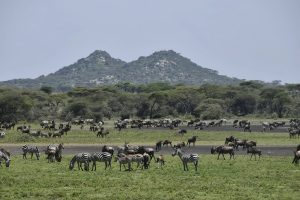
Ndutu is located in northern Tanzania, within the southern Serengeti ecosystem, near the boundary between the Ngorongoro Conservation Area and Serengeti National Park.
The area lies between the southern plains of Serengeti National Park and the Ngorongoro Conservation Area. Its location makes it an important seasonal grazing ground for migrating herbivores.
Ndutu is not a separate national park. Instead, it is a well-known safari area within a wider conservation landscape that includes different protected areas and wildlife habitats.
The region is characterized by extensive grasslands, acacia woodlands, shallow seasonal lakes, and open plains that support large populations of grazing animals and their predators.
Its position within the Serengeti ecosystem makes Ndutu particularly important during the Great Migration, when wildlife movements bring enormous herds into the area.
For travelers, Ndutu can be included in a northern Tanzania safari itinerary alongside destinations such as Serengeti National Park, Ngorongoro Crater, Tarangire National Park, and Lake Manyara National Park.
Ndutu is best known for its role in the Great Wildebeest Migration, especially the calving season that usually takes place during the early months of the year.
During this period, large numbers of wildebeest gather on the nutrient-rich grasslands. Many calves are born within a relatively short period, attracting predators and creating extraordinary wildlife-viewing opportunities.
However, Ndutu is not only about wildebeest. It also offers opportunities to observe zebras, gazelles, lions, cheetahs, leopards, hyenas, jackals, and many bird species.
The region’s open terrain often makes it easier to spot wildlife than in densely wooded environments. Its seasonal lakes and varied habitats also contribute to its ecological importance.
The main reasons travelers visit Ndutu include:
These attractions make Ndutu one of the most rewarding destinations for travelers seeking a wildlife-focused safari in Tanzania.
The Great Wildebeest Migration is one of the most extraordinary natural spectacles in the world. It involves the seasonal movement of vast herds of wildebeest, zebras, and other grazing animals across the Serengeti ecosystem in Tanzania and the Maasai Mara ecosystem in Kenya.
The animals move in response to rainfall, grass growth, and the availability of water. Their movements follow changing environmental conditions rather than a fixed timetable.
Ndutu plays a particularly important role during the southern phase of the migration.
During the late part of the year and the beginning of the following year, migrating herds often move into the southern Serengeti plains and Ndutu area.
The timing varies depending on rainfall and local conditions. In many years, large concentrations of wildebeest and zebras can be found around Ndutu from approximately December through March.
The fresh grass provides important nourishment for pregnant wildebeest and other grazing animals.
As the herds spread across the plains, the landscape becomes filled with moving animals, creating impressive scenes for safari visitors.
The calving season is the main attraction of Ndutu. It commonly reaches its peak around January and February, although the exact timing and distribution of births vary each year.
During this period, large numbers of wildebeest calves are born across the grasslands.
Newborn calves can often stand and begin moving shortly after birth. This rapid development helps them remain close to their mothers and the moving herds.
The abundance of newborn animals attracts predators, creating opportunities to observe hunting behavior, territorial activity, and the interactions between different species.
For wildlife photographers, this season offers a rare opportunity to capture intimate moments of animal behavior.
However, visitors should remember that wildlife encounters are unpredictable. Sightings depend on natural conditions, animal movements, and the location of the herds.
The calving season is important because it helps maintain the wildebeest population and supports the wider Serengeti ecosystem.
The availability of nutrient-rich grass allows mothers to feed while producing milk for their calves. The concentration of grazing animals also supports predators and scavengers.
Although predation is a natural part of the ecosystem, it can be difficult for some visitors to watch. Nevertheless, these interactions demonstrate how wildlife populations are connected through the food chain.
Ndutu provides an opportunity to understand these relationships in a natural setting.
Ndutu supports a rich variety of wildlife because of its extensive grasslands, seasonal water sources, and woodland habitats.
The combination of migrating herbivores and resident predators makes the region particularly attractive to safari travelers.
Wildebeest are among the most important animals in Ndutu. During the migration season, enormous herds may spread across the plains, moving together in search of fresh grass.
Their presence defines much of the region’s seasonal wildlife activity.
During calving season, visitors may see pregnant females, newborn calves, and large groups grazing together. The movement of these herds also influences the behavior of predators and other scavengers.
Zebras are frequently seen alongside wildebeest during the migration.
Their black-and-white stripes create striking patterns across the grasslands, making them particularly attractive subjects for photography.
Zebras and wildebeest often graze in the same general areas, although they have different feeding preferences and behaviors.
Their presence adds to the diversity of the migrating herds and contributes to the ecological dynamics of the plains.
Lions are among the most sought-after animals on a Ndutu safari.
The abundance of herbivores provides food for these powerful predators, making the region a rewarding place to search for lion prides.
Visitors may encounter lions resting beneath trees, moving through the grass, interacting with cubs, or approaching grazing herds.
Hunting activity is never guaranteed, but the concentration of prey during migration season can create favorable conditions for predator sightings.
A knowledgeable safari guide can help visitors understand lion behavior while ensuring that wildlife is observed responsibly.
Ndutu’s open grasslands provide suitable habitat for cheetahs, which rely on speed and visibility when hunting.
These elegant cats are often seen scanning the plains, resting on small rises, or moving through the grass in search of prey.
The region is especially attractive to photographers hoping to capture cheetahs against an open landscape.
Cheetahs are naturally sensitive to disturbance, so safari vehicles should maintain appropriate distances and follow guide instructions.
Leopards are more elusive than many other predators in Ndutu because they often prefer areas with trees, woodland, or thick vegetation.
They may be seen resting on branches, moving through wooded areas, or hunting smaller animals.
Sightings are possible but less predictable than those of some other wildlife species.
Visitors interested in leopards should be patient and understand that these animals naturally spend much of their time hidden from view.
Spotted hyenas are an important part of the Ndutu ecosystem.
They are skilled hunters and scavengers, playing a major role in the natural food chain.
Visitors may observe hyenas moving across the plains, gathering around dens, or interacting with other members of their clan.
Their behavior becomes especially interesting when large herds and predator activity are concentrated in the same areas.
Jackals are frequently associated with open savannah ecosystems and may be observed searching for food or moving around grazing herds.
Other carnivores may also occur in the wider region, depending on habitat and season.
These smaller predators contribute to the ecological balance and provide additional opportunities for wildlife observation.
Grant’s gazelles and Thomson’s gazelles are among the antelopes that visitors may encounter in the Ndutu area.
Their speed and alert behavior make them interesting to observe, especially when predators are nearby.
Other herbivores may include warthogs, giraffes, and buffaloes in suitable habitats.
The species seen on any particular safari depend on the season, local conditions, and the route taken.
Although Ndutu is famous for its large mammals, it also offers rewarding birdwatching opportunities.
The region’s grasslands, woodlands, and seasonal lakes attract different bird species throughout the year.
Birdwatchers may encounter ostriches, kori bustards, secretarybirds, vultures, eagles, storks, and various smaller grassland birds.
Seasonal wetlands can be particularly productive when water and food are available. Migratory birds may also contribute to the diversity observed at different times of year.
Raptors are an important part of the Ndutu ecosystem. Eagles and other birds of prey search the plains for small animals, while vultures may gather around carcasses.
Observing these birds offers insight into the wider food chain and the relationship between predators and scavengers.
Ndutu’s seasonal lakes and wetlands attract birds that depend on shallow water and surrounding vegetation.
Bird species vary with water levels, rainfall, and the time of year. Visitors interested in birdwatching should carry binoculars and consider a guide with local knowledge.
A safari in Ndutu can therefore appeal not only to big-game enthusiasts but also to travelers interested in the diversity of African birdlife.
Ndutu’s landscape is one of its greatest attractions. The region combines open plains, short-grass grasslands, acacia woodlands, seasonal lakes, and distant rocky outcrops.
These different habitats support a wide range of wildlife while creating varied scenery for visitors.
The open grasslands are especially important during the migration season.
Their broad horizons provide excellent visibility, allowing travelers to observe herds across large areas of the plains.
The grass changes in appearance throughout the year. Following rainfall, the plains can become green and lush. During drier periods, the grass may become shorter and more golden.
This changing landscape influences grazing patterns and helps explain why the migration moves through different areas over time.
Acacia trees and other woodland vegetation provide shade and shelter for wildlife.
Lions may rest beneath trees during the heat of the day, while leopards can use wooded areas to remain concealed.
The contrast between the trees and open plains also creates beautiful photographic compositions.
Seasonal lakes and shallow water bodies contribute to the region’s ecological importance.
Their size and water levels change according to rainfall, affecting wildlife distribution and bird activity.
When water is available, animals may gather nearby to drink or feed on surrounding vegetation.
These locations can provide excellent wildlife-viewing opportunities, although access and animal activity vary throughout the year.
Ndutu can be visited at different times of the year, but the best time depends on whether you want to witness the calving season, see migrating herds, or explore the wider Serengeti ecosystem.
This is generally the most popular period for visiting Ndutu.
Migrating wildebeest and zebras often gather across the southern Serengeti plains during these months. The calving season commonly peaks around January and February.
Travelers during this period may enjoy excellent opportunities to observe large herds, newborn calves, and predators.
However, the timing of the migration depends on rainfall. Wildlife can move between different parts of the southern Serengeti, so the precise location of the herds changes from year to year.
Booking accommodation and safari vehicles early is advisable, particularly during the busiest weeks.
The long-rain season often brings greener vegetation and a quieter atmosphere to parts of northern Tanzania.
The migration generally begins moving away from the southern plains as animals follow changing grazing conditions.
Rain can make some roads muddy or difficult to navigate, and wildlife may become more dispersed.
This period may suit travelers who value green landscapes and have flexible schedules, but it is important to confirm seasonal road access and camp operating arrangements.
As the dry season progresses, many migrating herds move toward the western parts of the Serengeti ecosystem.
Ndutu may no longer hold the large concentrations of wildebeest associated with calving season, although resident wildlife remains in the wider area.
Visitors should choose their itinerary according to current migration information rather than assume that the herds will remain in Ndutu throughout the year.
During much of this period, migrating herds are often found farther north in the Serengeti ecosystem and, depending on conditions, across the border in Kenya’s Maasai Mara.
Ndutu is generally less suitable for travelers whose primary objective is to witness the main migration concentrations during these months.
However, it can still be included in a broader safari if the route and wildlife expectations are appropriate.
Short rains often help stimulate fresh grass growth across the southern Serengeti.
Migrating herds may begin returning toward Ndutu and surrounding plains, although the exact timing varies.
November can be an interesting time to observe changing wildlife patterns while enjoying the transition into the wetter season.
Travel tip: If seeing the wildebeest calving season is your main priority, January and February are often excellent months to consider. Because migration timing changes with rainfall, consult a safari operator for current wildlife-location information before booking.
A safari in Ndutu offers opportunities to explore the plains and observe wildlife in its natural habitat.
The most suitable experience depends on the season, length of stay, accommodation location, and interests of the traveler.
Morning game drives are popular because many animals are active during the cooler hours after sunrise.
Visitors may encounter predators returning from hunts, grazing herds moving across the plains, and birds becoming active.
The early light can also create excellent conditions for wildlife photography.
Afternoon drives provide additional opportunities to search for wildlife and appreciate the changing scenery.
Animals may be seen feeding, resting, or moving toward water sources as temperatures change.
The softer light later in the afternoon can be particularly attractive for landscape photography.
A full-day safari allows travelers to cover more ground and spend additional time observing animals.
This can be especially valuable during the migration season, when herds and predators may be distributed across a wide area.
Full-day excursions should be planned with an experienced guide who understands the landscape, current conditions, and relevant park regulations.
Ndutu is particularly popular with wildlife photographers because of its open terrain and seasonal concentrations of animals.
Photographers may capture scenes of grazing herds, predator behavior, newborn calves, birds, and the wide horizons of the savannah.
A camera with a telephoto lens can be useful, although a smartphone can still produce memorable images.
Photographers should avoid disturbing animals, crowding wildlife sightings, or asking drivers to break park regulations for a better angle.
Accommodation in and around Ndutu includes seasonal tented camps, mobile safari camps, and other safari properties serving visitors to the southern Serengeti ecosystem.
The best choice depends on your budget, travel dates, desired comfort level, and access requirements.
Luxury tented camps offer a comfortable safari experience while maintaining a close connection to the natural environment.
Facilities may include spacious guest tents, private bathrooms, dining areas, attentive service, and organized game drives.
Some camps are positioned to take advantage of seasonal wildlife movements, although exact locations and operating arrangements vary.
Luxury accommodation can be particularly attractive for couples, photographers, and travelers seeking a premium safari experience.
Midrange camps often provide a balance between comfort and cost.
Facilities vary but may include furnished tents, private or shared bathrooms, dining services, and access to guided game drives.
These camps can be suitable for families, couples, and travelers who want to spend most of their time exploring the wildlife areas.
Budget travelers may choose organized camping safaris, depending on available facilities and seasonal arrangements.
These experiences can offer a more basic way to explore the region while keeping costs manageable.
Travelers should confirm whether camping equipment, meals, park fees, transport, and guiding services are included in the package.
During the migration season, accommodation location can influence how much time you spend observing wildlife rather than driving between different areas.
Staying at a suitable camp near the seasonal herds may allow for easier access to morning and afternoon game drives.
However, the best location changes with the migration. A camp that is well positioned in one season may be less convenient at another time.
It is therefore important to choose accommodation according to your travel dates and wildlife objectives.
Ndutu is accessible through the northern Tanzania safari network. The most appropriate route depends on your arrival point, the location of your accommodation, and the condition of the roads.
Arusha is a common starting point for northern Tanzania safaris.
From Arusha, visitors generally travel toward the Ngorongoro Conservation Area and then continue into the southern Serengeti ecosystem, depending on their planned route.
Road transfers can take several hours, and journey times depend on road conditions, stops, weather, and the exact location of the camp.
A private safari vehicle provides flexibility for wildlife stops and photography.
Ndutu can be combined with a visit to Ngorongoro Conservation Area.
Travelers may explore the crater or surrounding highlands before continuing toward the Ndutu plains.
The best route depends on the itinerary and relevant conservation-area regulations. Visitors should allow sufficient time for transfers rather than trying to combine too many activities into one day.
Some safari itineraries use scheduled or chartered light aircraft services to airstrips serving the wider Serengeti region.
Availability depends on the season, route, and camp location. Travelers should confirm the appropriate airstrip and transfer arrangements with their safari operator.
Flying can reduce road-transfer time, but additional transfers may still be required between the airstrip and accommodation.
Ndutu is commonly included in multi-day northern Tanzania safaris.
A typical itinerary may combine Ndutu with Serengeti National Park, Ngorongoro Crater, and Tarangire National Park.
Lake Manyara National Park may also be included where time and routing permit.
The best combination depends on the length of the trip and the wildlife experiences you want to prioritize.
A three-day stay can provide a rewarding introduction to the Ndutu wildlife experience, especially during the calving season.
Arrive in the Ndutu area by road or through an appropriate airstrip transfer, depending on your itinerary.
After checking into your accommodation, enjoy lunch and prepare for an afternoon game drive.
Explore the open plains in search of wildebeest, zebras, gazelles, and predators. During the calving season, your guide may focus on areas where herds are concentrated.
Return to camp in the evening for dinner and relaxation.
Begin with an early morning game drive to take advantage of the cooler hours.
Spend the day exploring different habitats, observing wildlife, and learning about the relationship between grazing animals and predators.
If the herds are concentrated nearby, your guide may help you look for newborn calves, lion prides, cheetahs, or hyenas.
Enjoy a suitable lunch arrangement during the excursion, then continue exploring before returning to camp.
Enjoy a final morning game drive, depending on your departure arrangements.
Use the remaining time to observe wildlife, photograph the landscape, and appreciate the distinctive atmosphere of the southern Serengeti plains.
After breakfast, depart for your next destination, such as Ngorongoro Conservation Area, another part of Serengeti National Park, or Arusha.
This itinerary should be adapted to migration conditions, accommodation location, and the actual transfer times involved.
Ndutu can be a rewarding destination for different types of travelers.
Families with an interest in wildlife may enjoy observing migrating herds, learning about animal behavior, and discovering the natural environment.
Parents should check minimum age requirements for game drives, camp policies, and any restrictions on activities.
Long game drives can be tiring for younger children, so it is important to choose an itinerary that suits the family’s needs.
Ndutu’s wide-open landscapes, scenic sunsets, and remote safari camps can create a memorable setting for couples.
Some camps offer private dining arrangements, comfortable tented accommodation, or special safari experiences, depending on availability.
Couples planning a honeymoon or anniversary trip should discuss their preferences with the safari operator before booking.
Photographers often prioritize Ndutu during the calving season because of the potential to observe newborn animals and predator activity.
A longer stay provides more flexibility to wait for suitable light, follow wildlife movements, and capture different behaviors.
Travelers planning a photography-focused trip should communicate their interests in advance so that the vehicle arrangements, accommodation location, and daily schedule support their goals.
Ndutu is part of an ecologically important landscape that supports wildlife migration and the natural processes of the Serengeti ecosystem.
Responsible tourism helps protect this environment while supporting the communities and conservation systems connected to it.
Visitors can contribute by following several important practices.
These practices help preserve Ndutu’s natural beauty and ensure that future travelers can continue enjoying its wildlife.
Preparing well for a Ndutu safari can make the experience more comfortable.
Recommended items include:
Temperatures can change considerably between early morning, midday, and evening. Dressing in layers is usually more practical than relying on one heavy garment.
Travelers flying in small aircraft should also check baggage weight and luggage-size restrictions before packing.
Ndutu is famous for the Great Wildebeest Migration, particularly the calving season when large numbers of wildebeest give birth on the southern Serengeti plains.
It is also known for lions, cheetahs, hyenas, zebras, gazelles, and excellent wildlife photography opportunities.
Ndutu is located in northern Tanzania, within the southern Serengeti ecosystem near the boundary between Serengeti National Park and Ngorongoro Conservation Area.
December to March is generally the main period to consider for migration-related experiences in Ndutu. January and February are often especially rewarding for the calving season, although the exact timing depends on rainfall and herd movements.
Yes. Ndutu is an important seasonal area for the Great Migration, especially during the southern plains phase and calving season.
However, the herds move according to environmental conditions, so sightings and herd concentrations cannot be guaranteed.
Two or three days can provide a good introduction to the region. Three or more days offer additional opportunities to explore different areas and observe wildlife without rushing.
Ndutu is a safari region within the broader Serengeti ecosystem. It is associated with the southern Serengeti plains and the adjoining Ngorongoro Conservation Area. The exact location of an activity or camp determines which protected-area rules and fees apply.
Yes. Ndutu and Ngorongoro Crater are frequently combined in northern Tanzania safari itineraries.
Travelers should plan the transfer and crater visit carefully because driving times, conservation-area regulations, and crater-entry arrangements affect the schedule.
Yes. The open plains and seasonal concentration of wildlife make Ndutu a particularly attractive destination for wildlife photographers.
The calving season offers opportunities to photograph newborn animals and predator behavior, although individual sightings depend on natural conditions.
Wildlife may include wildebeest, zebras, gazelles, lions, cheetahs, leopards, spotted hyenas, jackals, and a wide variety of birds. The species and numbers observed depend on the season and the area visited.
Yes, although the experience may differ significantly. Wildlife remains in the wider ecosystem throughout the year, but the large concentrations of migrating wildebeest associated with calving season are generally less likely to be found in Ndutu during other months.
Travelers whose primary objective is the Great Migration should plan according to seasonal wildlife movements.
Ndutu Region is one of Tanzania’s most exciting destinations for experiencing the Great Wildebeest Migration and the remarkable wildlife of the Serengeti ecosystem.
Its open grasslands, seasonal lakes, acacia woodlands, and abundant wildlife create a beautiful natural environment. During the calving season, the region becomes especially remarkable as large herds of wildebeest gather on the plains and predators follow the seasonal abundance of prey.
Visitors can enjoy morning and afternoon game drives, observe lions and cheetahs, photograph newborn animals, and discover the ecological relationships that sustain the savannah.
The region can also be combined with other northern Tanzania destinations, including Serengeti National Park and Ngorongoro Crater, to create a varied and memorable safari.
For the best experience, travelers should choose their travel dates carefully, select accommodation suited to the season, and work with an experienced safari operator who understands the movement of wildlife.