
An Unforgettable Journey into the Wild
Great Apes of Africa: Discover the Continent’s Most Remarkable Primates. Africa is famous for its incredible wildlife, breathtaking landscapes, and unforgettable safari experiences. From the mighty elephant and powerful lion to the graceful giraffe, the continent is home to some of the world’s most remarkable animals.
Among Africa’s most fascinating wildlife are its great apes.
Gorillas, chimpanzees, and bonobos are intelligent, social, and highly expressive animals. They share many behaviors with humans, including communication, cooperation, family bonds, play, and caring for their young.
For travelers, seeing these animals in their natural habitats is much more than a wildlife encounter. It is an opportunity to connect with nature and gain a deeper appreciation for Africa’s forests and the wildlife they protect.


Great Apes of Africa – Best Safari Holidays – Uganda Safari
What Are the Great Apes of Africa? – Great Apes of Africa
Great apes are a group of highly intelligent primates that includes humans, gorillas, chimpanzees, bonobos, and orangutans.
Africa is home to three non-human great apes:
- Gorillas
- Chimpanzees
- Bonobos
These animals live mainly in the tropical forests of Central, East, and West Africa.
Unlike monkeys, great apes do not have tails. They also have large and complex brains, strong social relationships, and impressive learning abilities.
Their intelligence and human-like behavior make them some of the most fascinating animals to observe in the wild.
Mountain Gorillas: Africa’s Gentle Giants
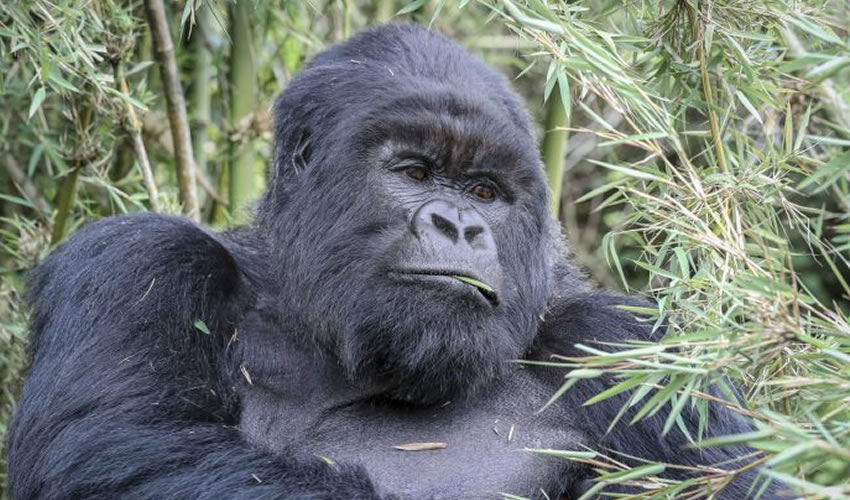
Mountain gorillas are among the most famous great apes in Africa.
They live in the misty mountain forests of the Virunga region and in Uganda’s Bwindi Impenetrable Forest. Their habitat is characterized by thick vegetation, steep slopes, bamboo forests, and beautiful mountain scenery.
Mountain gorillas live in family groups led by a dominant silverback. The silverback protects the group, guides its movements, and helps maintain peace within the family.
A gorilla family may include adult females, young males, juveniles, and playful infants.
Watching these animals interact is one of the most rewarding wildlife experiences in Africa.

Gorilla Trekking in Uganda – Great Apes of Africa
Uganda is one of the best destinations in Africa for mountain gorilla trekking.
The main destinations are Bwindi Impenetrable National Park and Mgahinga Gorilla National Park.
Gorilla trekking begins with a guided walk through the forest. The journey can involve steep slopes, thick vegetation, and muddy trails, but the experience becomes worthwhile when you finally reach a gorilla family.
You may see a mother caring for her infant, young gorillas playing in the vegetation, or a powerful silverback resting nearby.
The experience is peaceful, exciting, and deeply memorable.

Gorilla Trekking in Rwanda
Rwanda is another leading destination for mountain gorilla encounters.
In Volcanoes National Park, travelers hike through the beautiful volcanic landscape in search of habituated gorilla families.
The park forms part of the larger Virunga ecosystem and is surrounded by dramatic volcanic mountains.
A gorilla trekking adventure in Rwanda can also be combined with golden monkey tracking, cultural experiences, and mountain hiking.
Chimpanzees: Africa’s Intelligent Great Apes – Great Apes of Africa
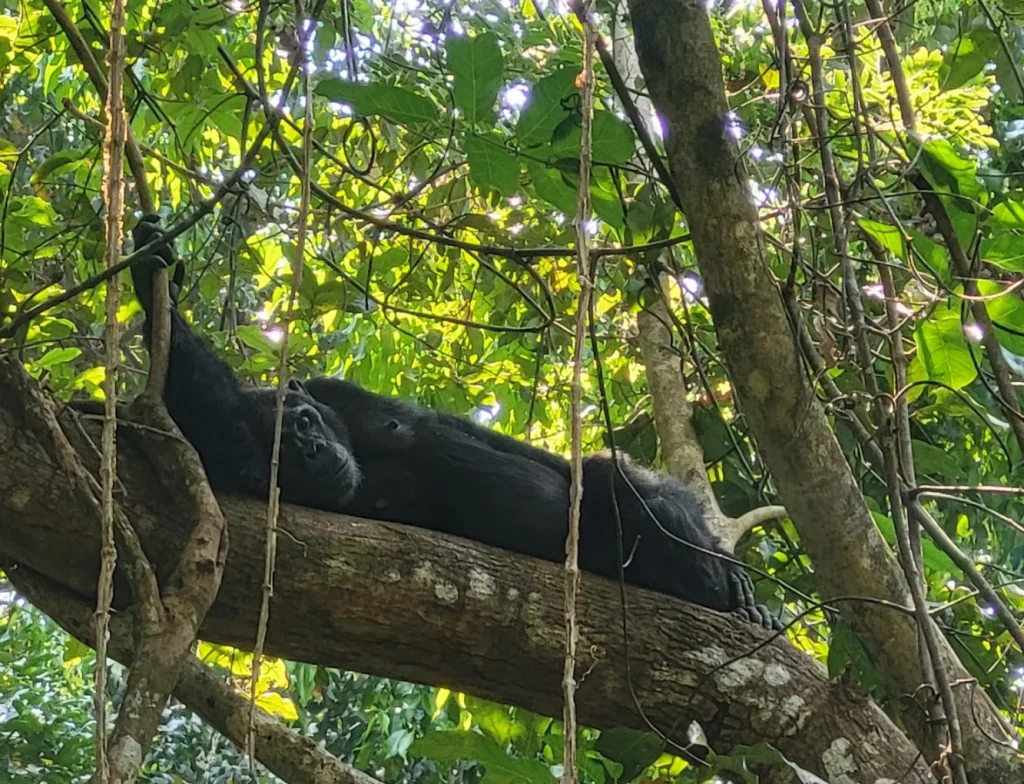
Chimpanzees are among the most intelligent animals on Earth.
They live in complex social communities and communicate through calls, gestures, facial expressions, and body movements.
Chimpanzees can also use tools to solve problems and obtain food. Their ability to learn and adapt makes them particularly interesting to observe.
Uganda is one of the best destinations for chimpanzee trekking, with Kibale National Park being one of the most famous chimpanzee destinations in Africa.
Chimpanzee Trekking in Kibale Forest
Kibale National Park is known for its rich population of primates and extensive tropical forest.
During a chimpanzee trek, visitors walk through the forest accompanied by experienced guides and trackers. The guides help locate chimpanzee communities and explain their behavior and natural environment.
Chimpanzee encounters can be very active.
You may hear loud calls echoing through the forest before seeing the animals moving through the trees. Chimpanzees may feed, climb, play, groom one another, or interact with other members of their community.
This makes chimpanzee trekking an exciting and unpredictable wildlife adventure.
Bonobos: The Lesser-Known Great Apes – Great Apes of Africa
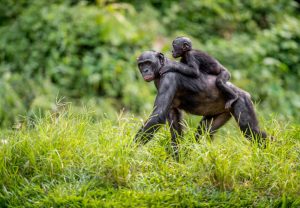
Bonobos are another fascinating member of Africa’s great ape family.
They are found naturally in the forests of the Democratic Republic of Congo, particularly within the Congo Basin.
Bonobos are closely related to chimpanzees, but they have their own distinctive social behaviors and physical characteristics.
They are highly social animals and are known for their strong relationships and cooperative behavior.
Bonobos are less commonly encountered by international travelers than gorillas and chimpanzees because their natural habitat is located in areas with more limited tourism infrastructure.
Nevertheless, they are an important part of Africa’s wildlife heritage and rainforest ecosystems.
Where Can You See Africa’s Great Apes?
Africa offers several destinations where travelers can experience great apes in protected natural environments.
Uganda – Great Apes of Africa
Uganda is one of Africa’s leading destinations for primate experiences.
Travelers can enjoy:
- Gorilla trekking in Bwindi
- Gorilla trekking in Mgahinga
- Chimpanzee trekking in Kibale
- Other primate experiences
- Wildlife safaris in national parks
- Cultural experiences with local communities
Uganda is particularly appealing because travelers can combine great ape experiences with classic African wildlife safaris.
Best Safari Holidays – Great Apes Uganda
Rwanda
Rwanda is internationally recognized for mountain gorilla trekking in Volcanoes National Park.
The country is also easy to explore, making it possible to combine gorilla trekking with wildlife viewing, cultural tours, hiking, and other outdoor experiences.

Democratic Republic of Congo – Great Apes of Africa
The Democratic Republic of Congo contains enormous tropical forests that provide habitat for gorillas, bonobos, and many other species.
It is one of Africa’s most important destinations for biodiversity and rainforest conservation.
Travel conditions can be more challenging than in some neighboring countries, so visitors should arrange their journeys with experienced and reputable tourism providers.

Tanzania
Tanzania is best known for its savannah wildlife, including the Serengeti, Ngorongoro, and Tarangire.
However, western Tanzania also offers exceptional chimpanzee experiences.
Mahale Mountains National Park, located beside Lake Tanganyika, is one of the most spectacular places to see chimpanzees in their natural environment.
The combination of tropical forest, mountains, clear waters, and chimpanzees creates a truly unique safari experience.
Why Great Apes Are Important to Africa
Great apes are important not only because they are fascinating animals but also because they play an important role in maintaining healthy forests.
Gorillas, chimpanzees, and bonobos feed on fruits, leaves, seeds, and other vegetation. As they move through the forest, they help disperse seeds and contribute to natural forest regeneration.
Protecting great apes therefore means protecting the wider ecosystems where they live.
When forests are conserved for gorillas and chimpanzees, countless other animals and plants also benefit.
Threats Facing Africa’s Great Apes
Despite their importance, Africa’s great apes face several serious threats.
Habitat Loss – Great Apes of Africa
Deforestation, agriculture, settlement expansion, and other human activities can reduce natural forest habitats.
When forests become smaller and fragmented, great ape populations can become isolated.
Illegal Hunting
Illegal hunting remains a concern in some areas.
Great apes may be hunted for meat, while young animals can sometimes become victims of the illegal wildlife trade.
Disease – Great Apes of Africa
Gorillas and chimpanzees can be vulnerable to diseases that affect humans.
Because of their close genetic relationship with people, responsible tourism practices are extremely important.
Travelers should follow park rules and avoid visiting great apes when they are sick.
Climate Change
Climate change can affect forests, food availability, rainfall, and other conditions that great apes depend on.
Protecting large and healthy forest ecosystems is therefore an important part of long-term conservation.
Great Ape Tourism and Conservation – Great Apes of Africa
Great ape tourism can make an important contribution to conservation.
Gorilla and chimpanzee trekking creates employment for guides, trackers, rangers, drivers, accommodation providers, and other local workers.
Tourism revenue can also support protected areas and conservation programs.
Local communities can benefit from tourism, creating additional incentives to protect forests and wildlife.
For this reason, choosing responsible tourism operators and following wildlife guidelines can help travelers contribute to conservation.

Lavish Safaris Uganda – The Great Apes Uganda
What Is a Great Ape Trek Like?
A great ape trek is very different from a traditional savannah game drive.
Instead of sitting in a safari vehicle, you walk through the forest with an experienced guide and trackers.
The terrain can be steep, muddy, and challenging. The animals may also be several hours away from the starting point.
However, the journey itself is part of the adventure.
You may hear birds calling from the canopy, discover colorful butterflies, hear distant chimpanzee calls, and walk through beautiful ancient forests.
Then comes the moment everyone has been waiting for: finding the great apes.
Standing quietly near a gorilla family or watching chimpanzees moving through the forest can be an unforgettable experience.
Best Time for Great Ape Trekking – Great Apes of Africa
Great ape trekking can be enjoyed throughout much of the year.
Many travelers prefer the drier seasons because forest trails can be easier to navigate. However, the rainy seasons can also offer rewarding experiences.
Rain can make the forest greener and more vibrant, while wildlife remains active throughout the year.
The ideal time depends on your destination, travel preferences, and overall safari itinerary.
What to Pack for a Great Ape Trek
Good preparation can make your forest adventure more comfortable.
Essential items include:
- Strong and comfortable hiking boots
- Long trousers
- Long-sleeved shirts
- Lightweight clothing
- Waterproof jacket
- Small backpack
- Drinking water
- Snacks
- Insect repellent
- Sunscreen
- Hat
- Camera
- Extra batteries
- Binoculars
- Walking poles if needed
- Gardening gloves for protection from vegetation
It is also important to be physically prepared for walking through uneven and sometimes steep terrain.
Lavish Safaris Uganda – Great Apes of Africa – Uganda Safari
Great Apes and the Human Connection – Great Apes of Africa
One of the most powerful aspects of seeing great apes is the sense of connection they create.
A gorilla caring for its infant, chimpanzees grooming one another, or young apes playing together can look remarkably familiar.
Their expressions, movements, relationships, and social interactions remind us that humans are part of the natural world.
For many travelers, this is what makes a great ape encounter so meaningful.
It is not simply about taking photographs. It is about observing another intelligent species living naturally in its own environment.
Combine Great Ape Trekking with a Wildlife Safari
A great ape experience can be combined with a traditional African safari to create a more complete adventure.
In Uganda, for example, travelers can combine:
Bwindi + Kibale + Queen Elizabeth National Park
This allows visitors to experience mountain gorillas, chimpanzees, elephants, lions, buffaloes, hippos, and many other species during one journey.
In Rwanda, travelers can combine gorilla trekking in Volcanoes National Park with wildlife viewing in Akagera National Park.
In Tanzania, chimpanzee experiences in western Tanzania can be combined with the country’s famous safari destinations.
Combining forests and savannahs allows travelers to experience two very different sides of Africa.
Why Visit Africa’s Great Apes? – Great Apes of Africa
Africa’s great apes offer an experience unlike any other safari.
You are not simply observing wildlife from a distance. You are entering their world.
You walk through the forest.
You listen to the sounds of nature.
You follow animal calls.
You search through the vegetation.
And then, suddenly, you find yourself standing near one of Africa’s most extraordinary creatures.
Whether it is the powerful silverback of a mountain gorilla family, a playful young chimpanzee, or a fascinating bonobo community, the encounter can remain in your memory for a lifetime.
Final Thoughts
The great apes of Africa are among the continent’s most extraordinary natural treasures.
Mountain gorillas, chimpanzees, and bonobos offer travelers an opportunity to experience Africa from a completely different perspective.
From the misty forests of Uganda and Rwanda to the tropical rainforests of the Democratic Republic of Congo and the remote landscapes of western Tanzania, these remarkable animals continue to inspire travelers from around the world.
A great ape adventure is more than a wildlife tour. It is a journey into nature, a lesson in conservation, and an opportunity to witness the fascinating lives of some of our closest animal relatives.