
Udzungwa Mountains National Park: A Complete Guide to Tanzania’s Rainforest Paradise. Udzungwa Mountains National Park is one of Tanzania’s most beautiful and ecologically important natural destinations. Known for its lush rainforests, spectacular waterfalls, rare monkeys, and scenic mountain trails, the park offers a unique experience for travelers who enjoy nature and outdoor adventures.
Unlike popular safari destinations such as Serengeti National Park, where visitors mainly explore the wilderness by vehicle, Udzungwa is best discovered on foot. Its forest trails lead through thick vegetation, past flowing streams, and toward breathtaking viewpoints overlooking the surrounding mountains and valleys.
The park is particularly famous for Sanje Waterfall, an impressive cascade surrounded by tropical forest. It is also home to rare primates, including the Sanje mangabey and Udzungwa red colobus, making it an important destination for wildlife enthusiasts and conservation-minded travelers.
Whether you enjoy hiking, birdwatching, photography, or discovering unusual wildlife, Udzungwa Mountains National Park offers an unforgettable opportunity to experience Tanzania’s natural beauty.
Udzungwa Mountains National Park is located in south-central Tanzania, mainly within the Morogoro Region. It forms part of the Eastern Arc Mountains, a chain of ancient mountain ranges known for their exceptional biodiversity.
The park covers approximately 1,990 square kilometers and was established in 1992 to protect its unique forests, wildlife, and natural landscapes.
The main access area is near Mang’ula village, which serves as a convenient starting point for many visitors. Travelers commonly reach the park by road from Dar es Salaam, Morogoro, or Mikumi.
Udzungwa is also an excellent addition to a southern Tanzania safari. Visitors can combine a forest adventure with wildlife viewing in Mikumi National Park or plan a longer journey to other destinations in the southern safari circuit.
Udzungwa is famous for its extraordinary biodiversity, mountain scenery, and walking trails. It offers a different kind of safari experience, focusing on forest exploration rather than traditional game drives.
The park is especially known for the following attractions.
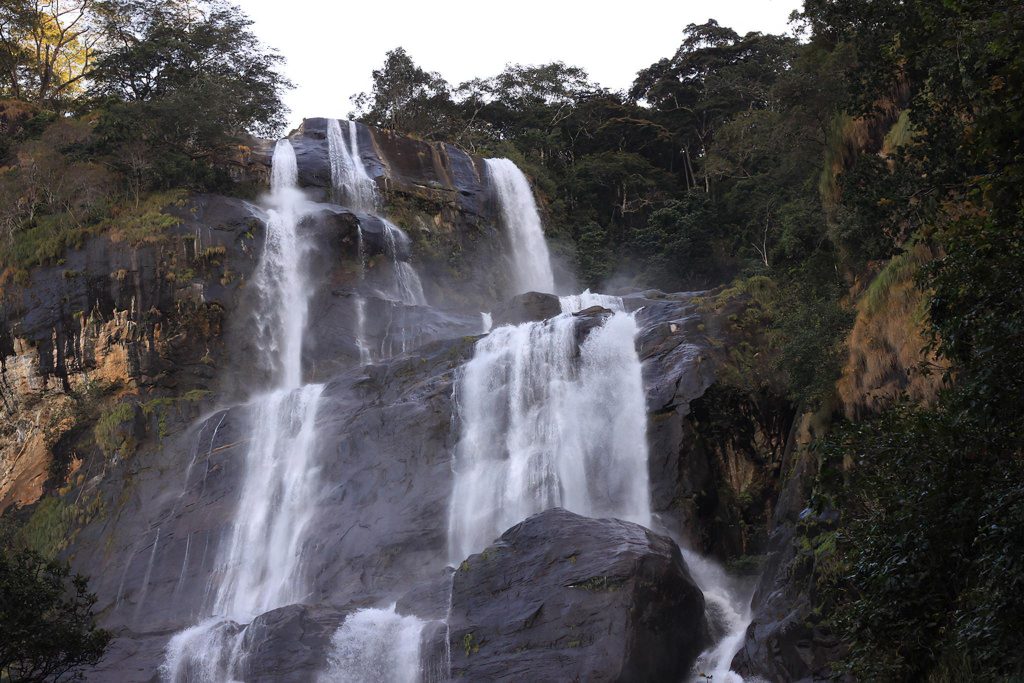
Sanje Waterfall is the park’s most famous natural attraction. Surrounded by dense forest, the waterfall plunges approximately 170 meters down a rocky mountainside.
Visitors can hike through the rainforest to reach viewpoints where they can appreciate the waterfall and the surrounding landscape. The journey offers opportunities to observe plants, birds, and monkeys along the way.
Udzungwa is home to several primates, including the Sanje mangabey and Udzungwa red colobus. These species are particularly important because of their restricted natural ranges and conservation value.
Seeing them in their natural habitat can be one of the most memorable parts of a visit.
The park protects forests that form part of the Eastern Arc Mountains, one of Africa’s most important biodiversity regions.
Its vegetation provides shelter, food, and breeding habitats for numerous animals, birds, insects, and other organisms.
Udzungwa offers hiking opportunities ranging from shorter forest walks to more demanding treks.
Visitors can explore shaded forest trails, discover waterfalls, and enjoy views of the surrounding countryside.
The park’s forests support a variety of bird species, including birds associated with the Eastern Arc Mountains. This makes Udzungwa an attractive destination for both experienced birdwatchers and casual nature lovers.
Sanje Waterfall is one of Tanzania’s most impressive forest waterfalls and a major reason many travelers visit Udzungwa Mountains National Park.
The waterfall is surrounded by thick vegetation, steep slopes, and beautiful mountain scenery. Its height and dramatic setting make it a popular attraction for hikers and photographers.
The hike to Sanje Waterfall takes visitors through a variety of forest environments. Along the trail, you may see towering trees, tangled roots, ferns, butterflies, and colorful birds.
The walk also offers opportunities to listen for monkeys and observe the smaller details of the rainforest ecosystem.
Some sections of the trail are steep and uneven, so the hike can be physically demanding. Conditions may become more difficult after rainfall, when the ground is slippery.
Visitors should wear sturdy hiking shoes, carry sufficient drinking water, and follow the instructions of their guide.
Reaching the waterfall provides a rewarding opportunity to appreciate the beauty of the Udzungwa Mountains.
Depending on conditions and designated viewing areas, visitors can enjoy views of the cascading water, surrounding forest, and distant valley.
The sound of rushing water and the cool atmosphere make this a peaceful place to pause during a hiking adventure.
Swimming should only be considered where permitted and when park staff confirm that conditions are safe.
Udzungwa is best known for its forest wildlife, particularly its rare primates. Because much of the park is covered by dense vegetation, animals can be more difficult to spot than those in open savanna parks.
Patience, quiet observation, and the knowledge of an experienced guide can make wildlife encounters more rewarding.
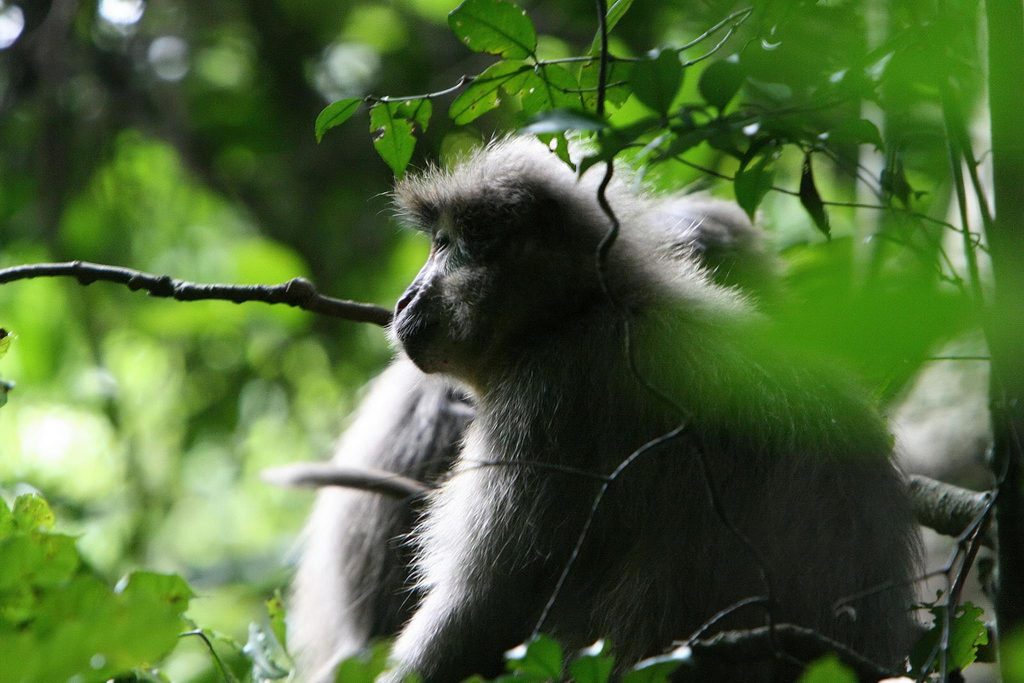
The Sanje mangabey is one of the park’s most distinctive animals. This rare monkey is naturally associated with the Udzungwa Mountains and is an important species for conservation.
Sanje mangabeys move through the forest in groups and spend time feeding, resting, and communicating among the trees.
Their movements can make them difficult to photograph, but a knowledgeable guide may help visitors locate them by recognizing their calls and activity.
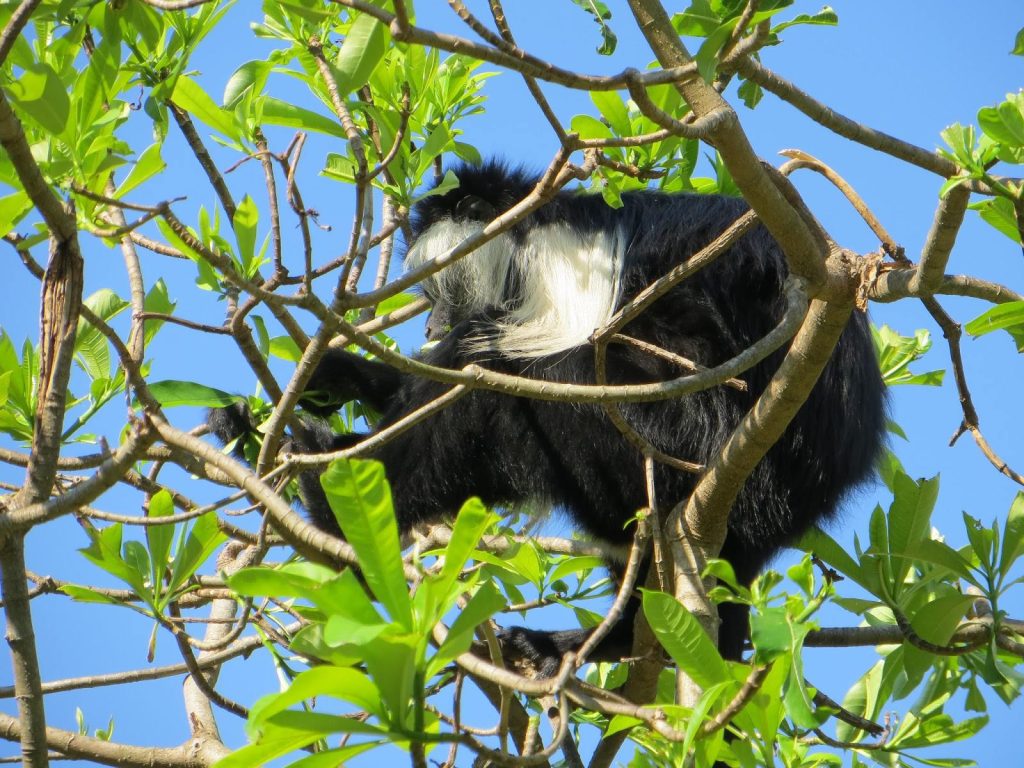
The Udzungwa red colobus is another important primate found in the park.
These monkeys spend much of their time in the forest canopy, feeding on leaves and other plant material. They may be seen moving between branches or gathering in groups among the trees.
Their presence highlights the importance of protecting Udzungwa’s natural forests.
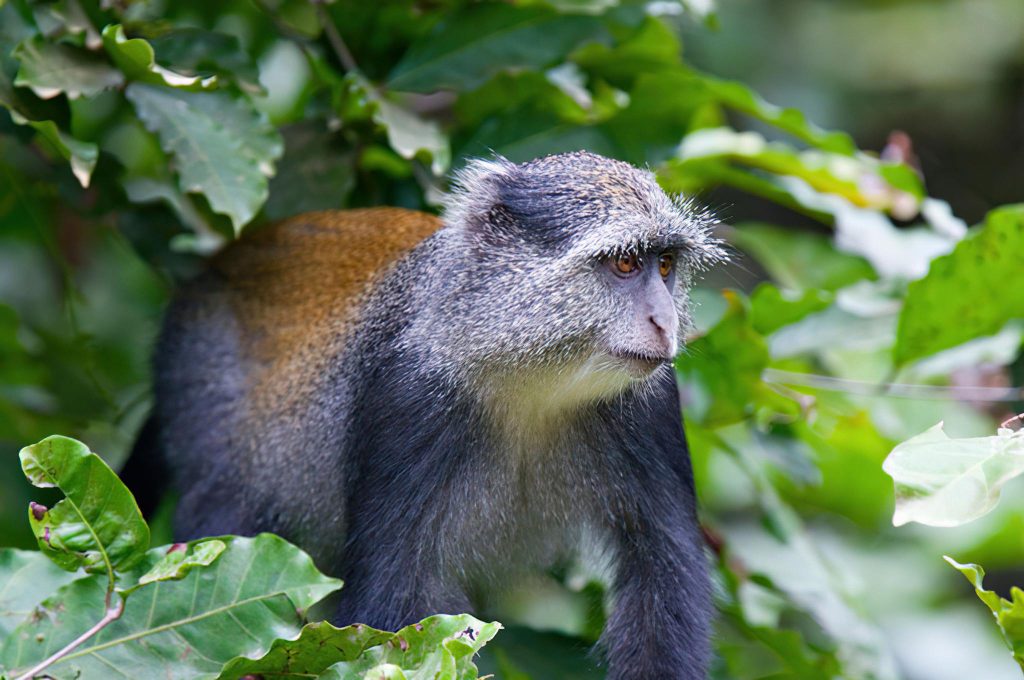
Blue monkeys are also found in Udzungwa. They inhabit forested areas and feed on a variety of plant materials and other available food.
Although their name suggests a bright blue color, their coats are generally greyish or olive-toned, with darker facial features.
Vervet monkeys may be encountered around forest edges and other suitable habitats. They are agile animals that move quickly through trees and shrubs.
Watching their interactions can be particularly interesting for visitors who enjoy observing animal behavior.
Udzungwa supports other mammals, including bushbuck, duikers, and smaller forest-dwelling species.
Elephants and buffaloes also occur in the wider park environment, although sightings are not guaranteed. The thick vegetation and walking-focused visitor experience mean that the park is not primarily a destination for large-mammal game drives.
For the best wildlife experience, explore with a guide who understands the forest and knows how to recognize signs of animal activity.
Udzungwa is an excellent destination for birdwatching because its forests provide habitats for a rich variety of bird species.
The park’s changing elevations, thick vegetation, streams, and forest clearings create different environments for birds to feed, nest, and move between habitats.
Visitors may encounter turacos, hornbills, sunbirds, greenbuls, and birds of prey. Some species are easier to identify by their calls than by their appearance, particularly when they are hidden in the forest canopy.
Udzungwa forest partridge: This distinctive forest bird is associated with the Eastern Arc region and is of particular interest to birdwatchers.
Livingstone’s turaco: Known for its striking plumage, this bird adds color to the forest environment.
Silvery-cheeked hornbill: A large forest bird recognized by its prominent bill and distinctive appearance.
Sunbirds: These small, active birds may be seen visiting flowering plants in search of nectar.
Forest raptors: Birds of prey may occasionally be spotted above the canopy or near open ridges.
The species you encounter will depend on the season, trail, and local conditions. Carry binoculars and allow enough time to observe birds without rushing.
One of the greatest treasures of Udzungwa Mountains National Park is its extraordinary plant and animal diversity.
The park contains several types of vegetation, including lowland forest, montane forest, woodland, and higher-elevation habitats. These environments change with altitude, rainfall, and local conditions.
Udzungwa forms part of the Eastern Arc Mountains, a region recognized for its long ecological history and high levels of endemism.
Endemic species are plants or animals that naturally occur in a particular area and are not naturally found elsewhere. The isolation of the Eastern Arc forests has allowed distinctive species to evolve over long periods.
Some trees in the forest develop massive trunks and spreading buttress roots that help support them in the soil.
Walking beneath these trees gives visitors a sense of the rainforest’s scale. Their roots, trunks, branches, and leafy canopies create habitats for many other organisms.
Moist forest conditions support ferns, mosses, climbing plants, and a wide range of flowering species.
These plants contribute to the park’s green appearance and provide food and shelter for insects, birds, and other wildlife.
Udzungwa is also home to butterflies, frogs, reptiles, and other small creatures.
Streams and damp forest areas are particularly important habitats for amphibians. Although these animals may be overlooked by visitors searching for monkeys, they are essential parts of the ecosystem.
The park’s biodiversity makes it valuable for scientific research, environmental education, and conservation.
There are several ways to explore Udzungwa, depending on your interests, fitness level, and available time.
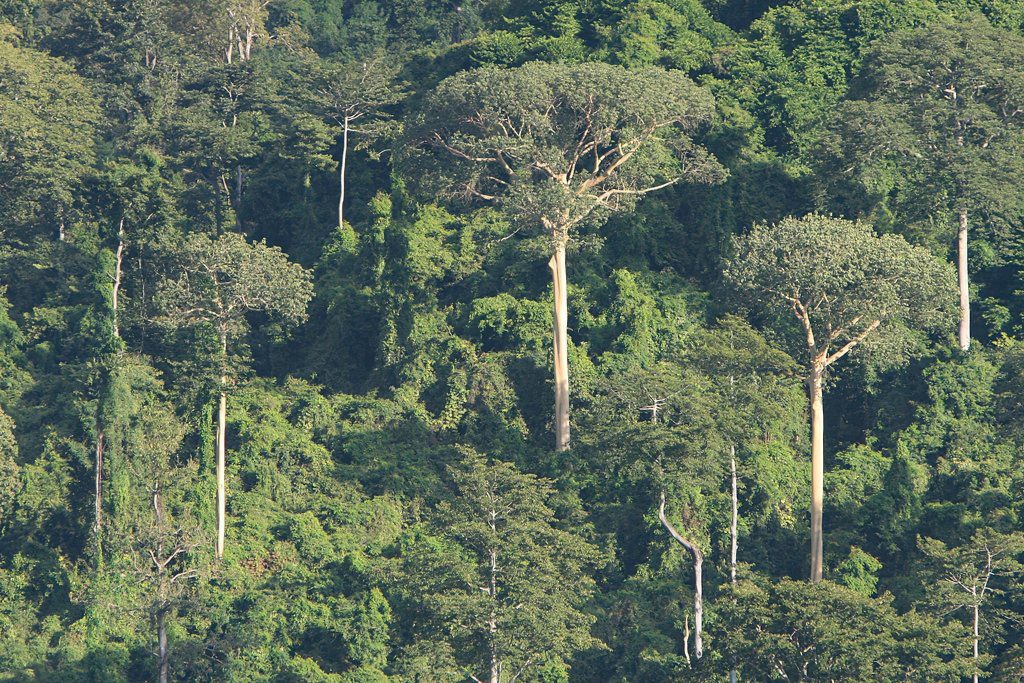
This is one of the most popular activities in the park. The trail passes through lush forest and leads to impressive waterfall scenery.
It is a good choice for travelers who want to experience the park’s landscape and wildlife during a single visit.
Walking through the forest allows visitors to discover different habitats, observe plants, and listen for wildlife.
Some trails are relatively short, while others require greater physical effort. Ask park staff or your guide to recommend a route that matches your ability.
Udzungwa is particularly attractive to travelers interested in monkeys and other forest wildlife.
Guided walks provide opportunities to look for Sanje mangabeys, Udzungwa red colobus, and other primates. Sightings depend on animal movements, so they cannot be guaranteed.
Birdwatching is rewarding throughout the forest, especially for visitors who enjoy careful observation.
Binoculars and a bird identification guide can help you recognize species that might otherwise be difficult to see.
Udzungwa offers excellent opportunities for nature photography. Waterfalls, mountain views, forest plants, butterflies, birds, and monkeys provide a variety of subjects.
Early morning can offer pleasant hiking conditions, although weather and light vary throughout the year.
Experienced hikers may consider longer routes toward higher elevations and panoramic viewpoints.
These treks require more preparation than shorter walks. Check current trail access, guiding requirements, weather conditions, and expected hiking times before setting out.
Udzungwa can be visited throughout the year, but the weather affects trail conditions, hiking comfort, and visibility.
The dry season is generally a good time for hiking because trails are often easier to manage than during periods of heavy rainfall.
Visitors can enjoy waterfall hikes, forest walks, and scenic viewpoints. Cooler mornings may also make longer walks more comfortable.
However, the forest can still be damp, and weather conditions can change quickly. Carry a light rain jacket and check local advice before beginning your hike.
During the rainy season, the forest becomes especially green, and streams and waterfalls can be impressive.

This period can be attractive to nature photographers who enjoy lush vegetation and dramatic forest scenery.
However, rain may make trails muddy and slippery. Heavy rainfall can also affect access to some areas, so travelers should remain flexible with their plans.
Choose the drier months if your main priority is hiking and easier trail conditions.
Consider the wetter months if you enjoy green landscapes and do not mind the possibility of rain.
Regardless of the season, check the weather forecast and follow the guidance of park staff.
Many visitors reach Udzungwa by road from Dar es Salaam, traveling through the Morogoro and Mikumi areas before continuing to Mang’ula.
The journey takes several hours, depending on traffic, road conditions, and stops along the way.
If you plan to hike on the day you arrive, leave enough time for the journey and check whether your chosen trail can be completed safely before closing time.
Udzungwa is a convenient addition to a safari that includes Mikumi National Park.
Mikumi offers traditional game drives across open landscapes, while Udzungwa provides rainforest hiking and waterfall experiences.
Combining the two parks gives travelers an opportunity to experience different sides of Tanzania’s natural environment.
The TAZARA railway has historically served the Mang’ula area. However, train schedules and service availability may change, so confirm current operations before making arrangements.
Regional flights followed by road transfers may be possible, depending on the itinerary and available services.
Confirm flight schedules, luggage restrictions, and transfer arrangements before booking.
Visitors can choose from guesthouses, lodges, and camping options around the park, particularly near Mang’ula village.
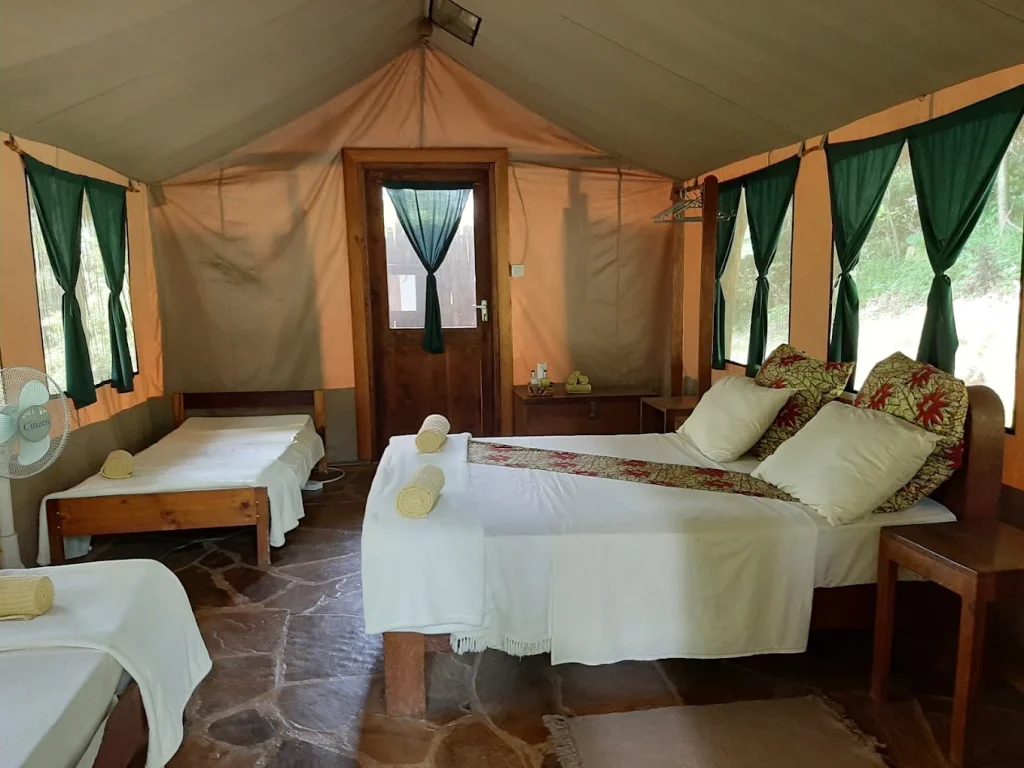
The best option depends on your budget, comfort preferences, and planned activities.
Guesthouses and lodges offer a convenient base for travelers planning day hikes.
Facilities vary, but some properties provide private rooms, bathrooms, meals, and help arranging local activities.
Staying near the park entrance can make it easier to start hiking early in the morning.
Camping may appeal to travelers who enjoy spending time outdoors.
Before choosing this option, confirm campsite availability, facilities, equipment requirements, permits, and any additional fees.
Travelers combining Udzungwa with other parks may prefer accommodation that fits into a wider southern Tanzania itinerary.
When selecting a property, consider its distance from the trailhead, meal arrangements, transport options, and the services included in the price.
It is advisable to arrange accommodation in advance, particularly during busy travel periods.
The total cost of visiting Udzungwa depends on your travel arrangements, the length of your stay, and the activities you choose.
Common expenses include:
A short visit focused on a waterfall hike may cost less than a multi-day trekking holiday involving private transport and accommodation.
Park fees and visitor requirements can change. Before traveling, check the latest charges with Tanzania National Parks and request a detailed quotation from your safari operator.
Ask which services are included, especially transport, meals, guiding, and park fees, to avoid unexpected expenses.
A two-day itinerary provides a good introduction to the park’s waterfalls, forests, and wildlife.
Arrive in the Mang’ula area and complete the required park registration and guiding arrangements.
Begin your hike through the forest, looking for birds, monkeys, butterflies, and interesting plants along the trail.
Continue toward Sanje Waterfall, taking breaks to enjoy the scenery and rest where appropriate.
After completing the hike, return to your accommodation for dinner and an overnight stay.
The total hiking time depends on your pace, weather conditions, and the time spent at the waterfall.
Start the day with a guided forest walk or another suitable trail.
Use this opportunity to focus on birdwatching, forest plants, or searching for primates. If you want to undertake a longer hike, confirm the route and requirements with park staff beforehand.
After your walk, return to your accommodation and continue to your next destination.
This itinerary offers a balanced introduction to Udzungwa without requiring an extended stay.
Udzungwa can be combined with several destinations to create a more varied Tanzania holiday.
Mikumi is one of the most practical destinations to combine with Udzungwa.
Enjoy game drives and savanna wildlife in Mikumi before continuing to Udzungwa for forest hiking, waterfalls, and primate viewing.
This combination is ideal for travelers who want both traditional safari activities and outdoor adventure.
Nyerere National Park offers another option for travelers with more time.
Its expansive wilderness and wildlife-viewing opportunities provide a different experience from the mountain forests of Udzungwa.
Travel times can be substantial, so plan transport and overnight stops carefully.
Ruaha is an attractive addition to a longer southern Tanzania safari.
Its open landscapes, river systems, and diverse wildlife contrast with Udzungwa’s lush forests and waterfalls.
Because distances between destinations can be considerable, a multi-day itinerary with suitable transport is recommended.
Udzungwa Mountains National Park plays an important role in protecting Tanzania’s natural heritage.
Its forests support rare species, protect watersheds, and provide habitats for a wide variety of plants and animals.
Responsible tourism helps reduce disturbance to wildlife and supports the long-term protection of these habitats.
Visitors can help by following a few simple guidelines:
By traveling responsibly, visitors can enjoy the park while helping preserve its natural environment for future generations.
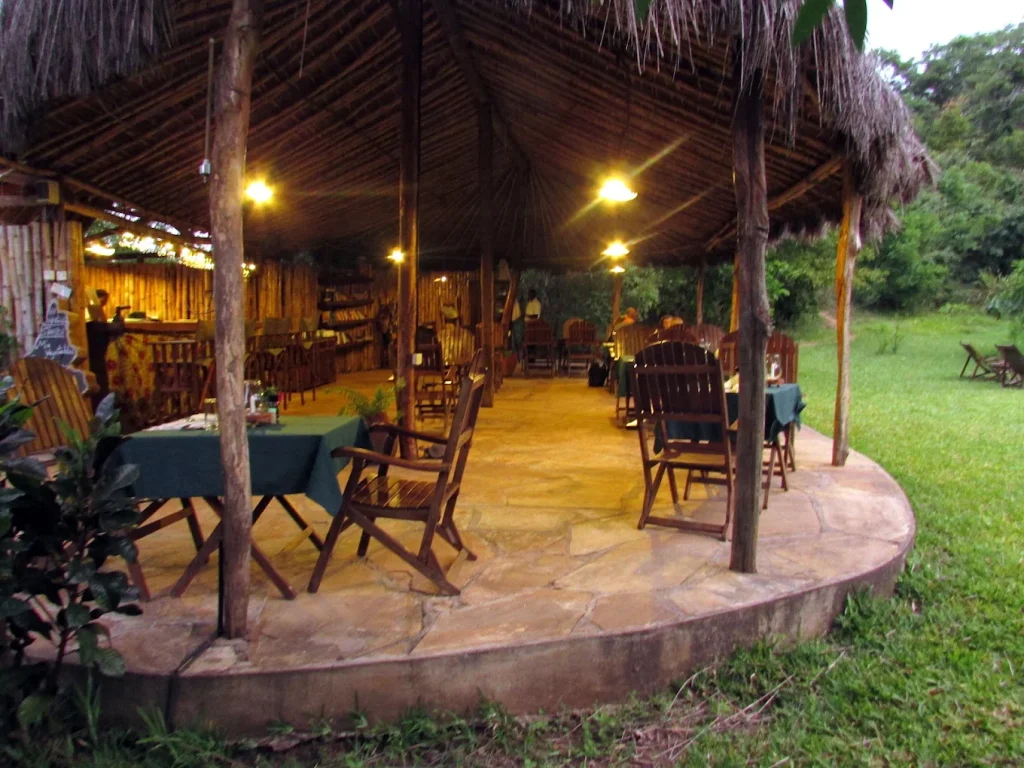
Udzungwa is ideal for travelers who enjoy rainforests, waterfalls, mountain scenery, and discovering unusual plants and animals.
The park offers opportunities for both shorter forest walks and more demanding mountain treks.
Visitors should choose trails according to their fitness level and experience.
The variety of forest habitats makes Udzungwa an appealing destination for birdwatching.
Travelers with binoculars and a knowledgeable guide may discover species that are difficult to observe elsewhere.
The park is particularly rewarding for visitors interested in primates and forest ecosystems.
It offers a different wildlife experience from the open plains and savanna landscapes associated with many African safaris.
Waterfalls, forest vegetation, mountain viewpoints, and wildlife create a wide range of photographic opportunities.
Visitors should protect their equipment from rain and humidity.
The peaceful environment and outdoor activities make Udzungwa an excellent choice for travelers seeking a nature-focused holiday.
However, visitors should be comfortable with walking and prepared for changing weather conditions.
Packing the right equipment will help make your visit safer and more comfortable.
Consider bringing:
For longer treks, carry sufficient water and food as recommended by your guide.
Avoid assuming that shops or other services will be available along forest trails.
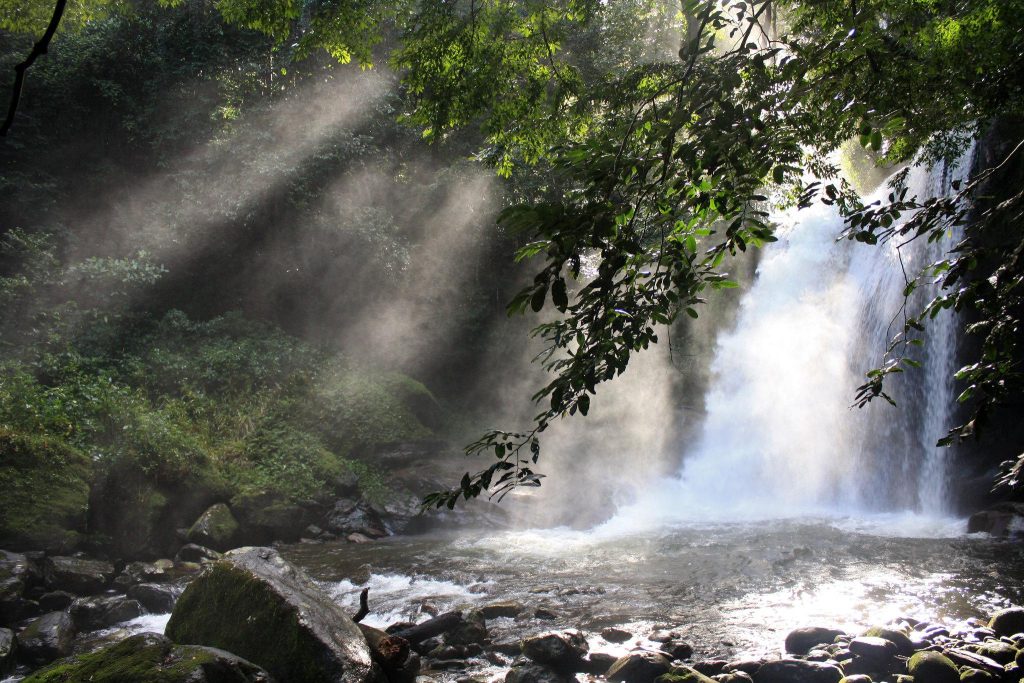
The park is famous for its ancient rainforests, Sanje Waterfall, rare primates, birdlife, and hiking opportunities.
It is located in south-central Tanzania, near Mang’ula and the Kilombero Valley, within the Eastern Arc Mountains.
Elephants occur in the broader park environment, but sightings are not guaranteed. The park is best known for forest biodiversity, hiking, waterfalls, and rare primates rather than conventional game drives.
One day may be sufficient for a short visit focused on a popular trail. Two days provide more time for hiking and wildlife observation, while longer stays suit travelers planning demanding treks.
The trail includes uneven ground and steep sections. Its difficulty depends on your fitness, the weather, and current trail conditions. Wear suitable footwear and follow your guide’s advice.
Swimming should only take place where it is permitted and conditions are considered safe. Follow park instructions because slippery rocks, strong currents, and changing water levels can create hazards.
The drier months, generally June to October, are often more convenient for hiking. The wetter months provide lush scenery but can bring muddy trails and more difficult conditions.
Some shorter walks may be suitable for families, depending on the children’s ages, fitness, and trail conditions. Parents should ask park staff about appropriate routes and follow all safety guidance.
Yes. The two parks make a good combination because Mikumi offers traditional wildlife game drives, while Udzungwa provides forest hiking and waterfall experiences.
Confirm current guiding requirements with park authorities before arrival. A knowledgeable guide can improve safety, help identify wildlife, and explain the park’s ecology.
Udzungwa Mountains National Park is one of Tanzania’s most rewarding destinations for travelers who appreciate nature, hiking, and biodiversity.
Its lush rainforests, spectacular Sanje Waterfall, rare primates, and rich birdlife create an experience that differs from a traditional African savanna safari.
Visitors can walk beneath towering trees, discover fascinating forest wildlife, enjoy mountain views, and learn about one of Tanzania’s most important biodiversity regions.
The park is also an excellent addition to a southern Tanzania itinerary, especially when combined with Mikumi National Park or other destinations.
For the best experience, select a trail that matches your fitness level, prepare for changing weather, arrange accommodation and guiding in advance, and follow responsible tourism practices.