
A Complete Guide to Africa’s Greatest Wildlife Spectacle
The Great Migration in Tanzania: A Complete Guide to Africa’s Greatest Wildlife Spectacle. The Great Migration in Tanzania is one of the most extraordinary wildlife spectacles in the world. Every year, millions of wildebeest, accompanied by hundreds of thousands of zebras and gazelles, move across the vast plains of East Africa in search of fresh grass and water. Their journey creates breathtaking scenes of wildlife movement, dramatic river crossings, and intense encounters between predators and prey.
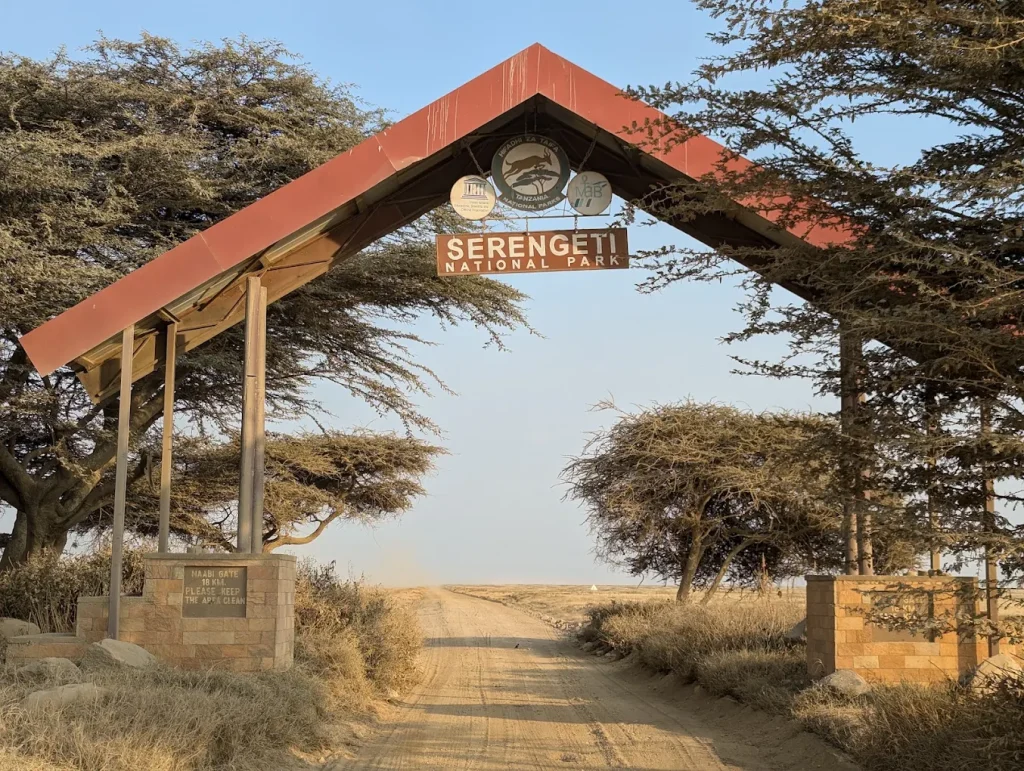
Tanzania plays a central role in this remarkable natural event, particularly through the world-famous Serengeti National Park. Together with Kenya’s Maasai Mara National Reserve, the Serengeti forms part of an enormous ecosystem that supports one of the largest remaining terrestrial animal migrations on Earth.
For wildlife enthusiasts, photographers, nature lovers, and safari travelers, witnessing the Great Migration is an unforgettable experience. From the arrival of newborn wildebeest in the southern Serengeti to the dramatic crossings of the Grumeti and Mara rivers, every stage offers something unique.
This comprehensive guide explores the Great Migration in Tanzania, including where it takes place, when to visit, the best locations for wildlife viewing, what to expect on safari, and how to plan a successful migration adventure.
What Is the Great Migration? – The Great Migration in Tanzania
The Great Migration is the annual movement of wildebeest and other grazing animals across the Serengeti–Mara ecosystem in Tanzania and Kenya. It is driven primarily by seasonal rainfall, which determines where fresh grass and reliable water can be found.
Approximately 1.5 million wildebeest participate in the migration, alongside large numbers of plains zebras and gazelles. The exact numbers vary, but the movement creates one of the world’s most impressive concentrations of wild animals.
Unlike a journey with a fixed starting point and destination, the Great Migration is a continuous cycle. The herds move through different parts of the ecosystem throughout the year, following changing vegetation and rainfall patterns.
During this journey, the animals encounter numerous challenges, including predators, exhaustion, and dangerous river crossings. Lions, leopards, cheetahs, hyenas, and crocodiles take advantage of the abundant prey, making the migration an important part of the natural balance of the ecosystem.
The Great Migration is not simply about animals moving from one place to another. It is a powerful demonstration of nature’s rhythms, survival, and the close relationship between wildlife and the environment.
Why Is the Great Migration So Famous?
The Great Migration attracts visitors from across the world because it combines enormous herds, dramatic landscapes, and extraordinary wildlife behavior.
1. Millions of Animals Moving Together – The Great Migration in Tanzania
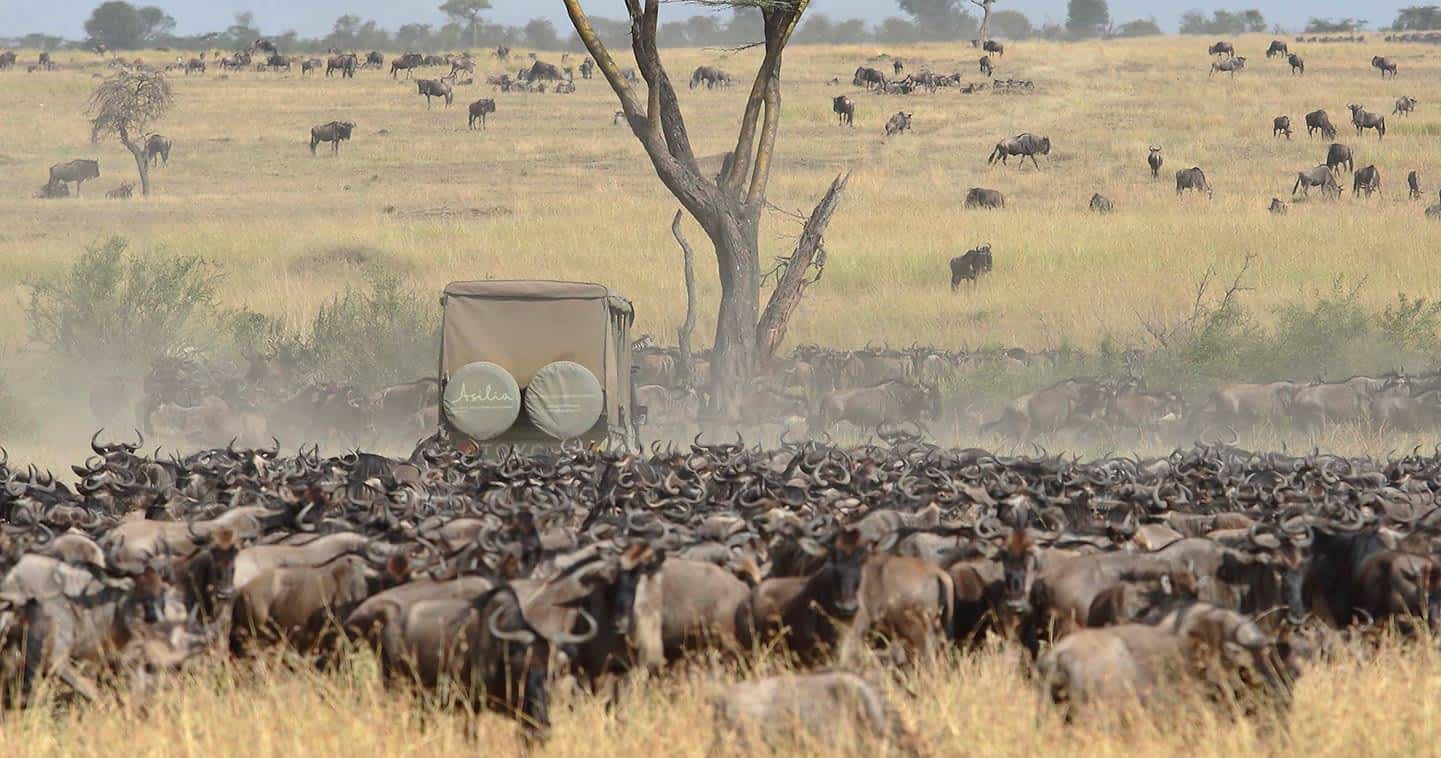
One of the most remarkable features of the migration is the sheer number of animals traveling across the plains. Herds of wildebeest stretch across the landscape, sometimes forming long lines that appear to continue endlessly.
The sight of thousands of animals grazing, running, or gathering near a river is both impressive and humbling. Zebras frequently travel alongside wildebeest, benefiting from their different grazing habits and shared ability to detect danger.
2. Dramatic River Crossings
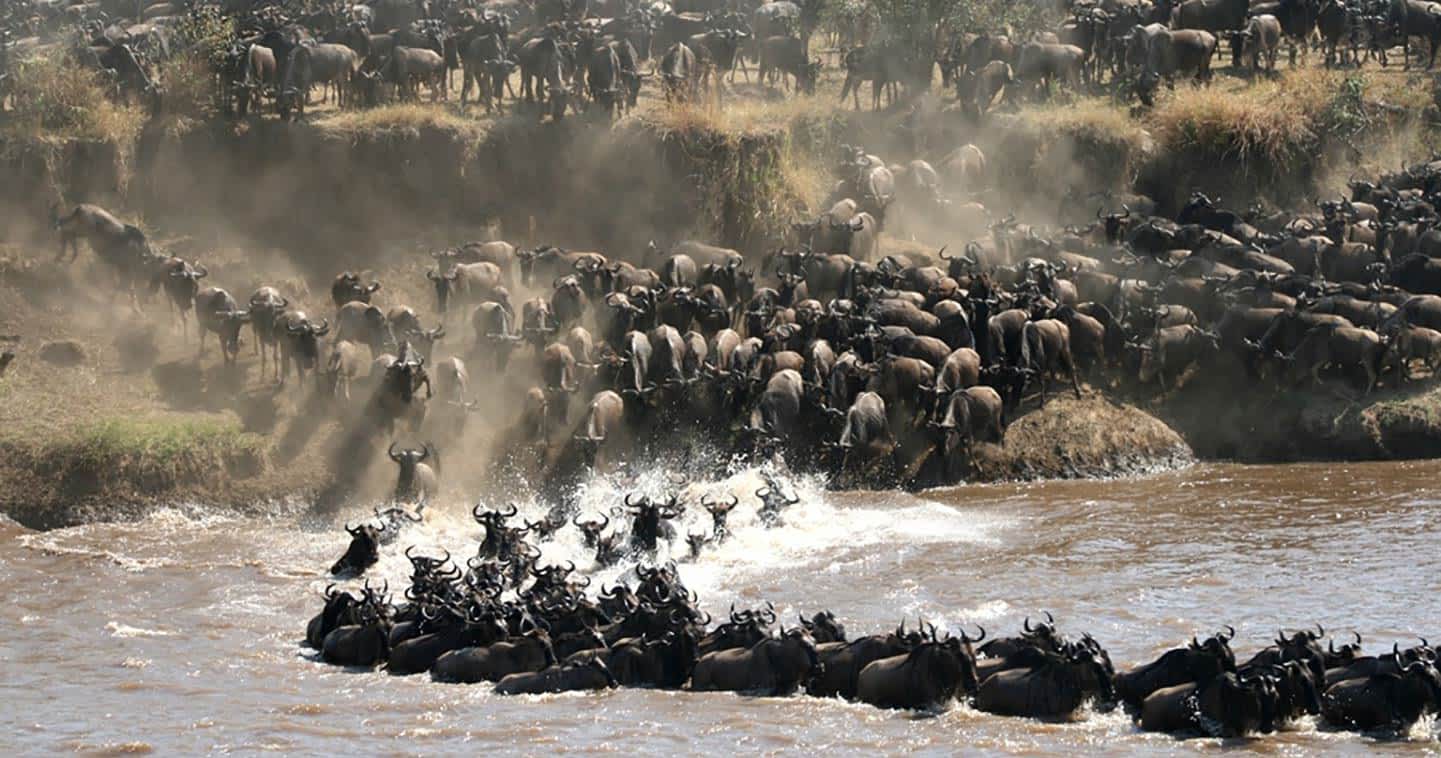
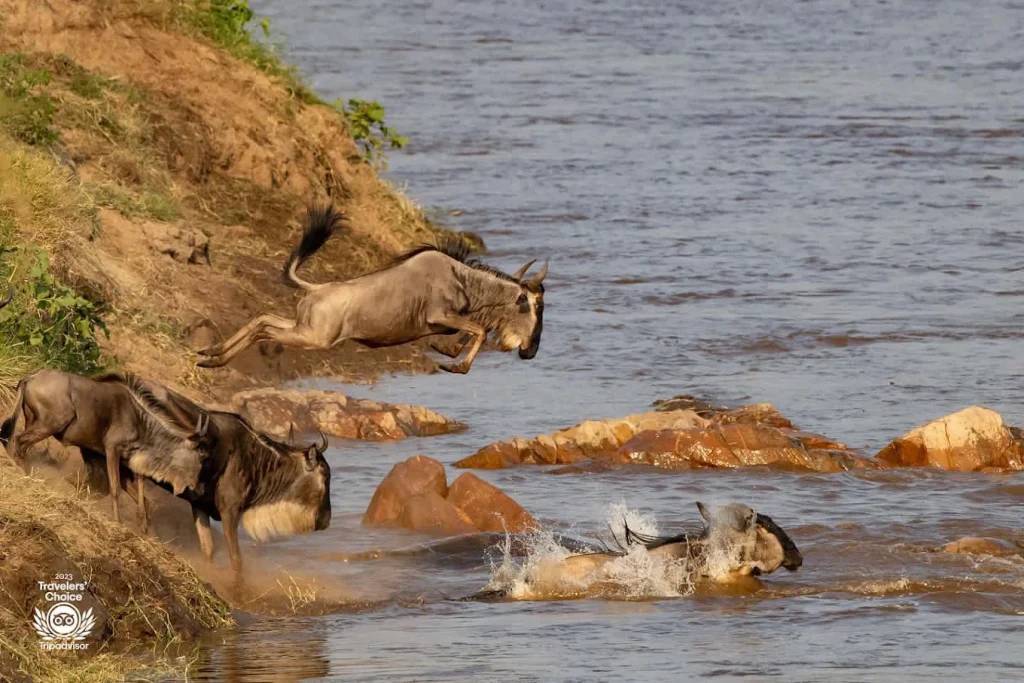
River crossings are among the most famous moments of the Great Migration. At certain times of the year, wildebeest and zebras approach rivers such as the Grumeti and Mara, where they may gather for hours before attempting to cross.
Once the animals begin moving, the riverbanks can become scenes of extraordinary activity. Herds rush into the water, creating splashes and confusion as they navigate strong currents and steep banks.
Nile crocodiles may pose a threat, while animals can become separated from their herds. However, crossings do not occur on a predictable schedule, and not every visit will include one.
3. The Calving Season – The Great Migration in Tanzania
The southern Serengeti becomes an important destination during the calving season, when large numbers of wildebeest give birth within a relatively short period.
This period provides excellent opportunities to observe newborn animals, maternal behavior, and predators hunting in the open grasslands.
4. Excellent Predator Viewing
The concentration of grazing animals attracts predators. Lions, cheetahs, leopards, spotted hyenas, and other carnivores may be seen hunting, resting, or protecting their territories.
These encounters provide a fascinating insight into the relationship between predators and prey in a functioning natural ecosystem.
5. Beautiful Landscapes – The Great Migration in Tanzania
The migration takes place across a variety of landscapes, including open grasslands, rolling hills, woodland, river valleys, and rocky outcrops known as kopjes.
These changing environments provide excellent scenery for wildlife photography and make each stage of the journey visually distinctive.
Where Does the Great Migration Take Place in Tanzania?
The Tanzanian portion of the migration occurs mainly within the Serengeti ecosystem, which extends across a broad area of northern Tanzania and connects with Kenya’s Maasai Mara.
Several areas are particularly important for following the herds.
1. Serengeti National Park
Serengeti National Park is the principal destination for experiencing the Great Migration in Tanzania. Its vast plains, rich wildlife populations, and varied habitats support the animals throughout much of their annual cycle.
Different sections of the park become important at different times of the year. The southern plains are especially significant during the calving season, while the western corridor and northern Serengeti become important during later stages of the migration.
Visitors can also encounter resident wildlife, including elephants, giraffes, buffaloes, and numerous bird species.
2. Southern Serengeti and Ndutu – The Great Migration in Tanzania
The Ndutu region, which lies within the broader southern Serengeti–Ngorongoro ecosystem, is particularly famous for the calving season.
From approximately December to March, wildebeest gather in large numbers when seasonal rains encourage the growth of nutritious grass. January and February are often especially rewarding for observing newborn calves.
The open plains provide good visibility, making it easier to watch animals grazing, moving in herds, and interacting with predators.
Ndutu is an excellent choice for travelers interested in wildlife photography, young animals, and predator activity.
3. Central Serengeti
The central Serengeti, particularly the Seronera area, is a valuable wildlife destination throughout the year.
Its permanent water sources and diverse habitats support resident wildlife even when the migrating herds are elsewhere. Depending on rainfall and herd movements, visitors may encounter large groups of wildebeest and zebras passing through the area.
Central Serengeti is also known for excellent opportunities to see lions, leopards, cheetahs, and other animals.
For travelers who want to combine migration viewing with general wildlife safaris, this region is an excellent option.
4. Western Corridor and Grumeti River – The Great Migration in Tanzania
The western corridor becomes important as many migrating herds move northwest from the central Serengeti, generally around May and June.
The Grumeti River is a well-known location for potential river-crossing activity. Its waters and surrounding vegetation create a different environment from the open southern plains.
Large herds may gather near the river, although the timing and frequency of crossings depend on rainfall, herd movements, and local conditions.
The western corridor is especially appealing to travelers seeking a less concentrated safari experience than some of the busiest migration-viewing areas.

5. Northern Serengeti and Mara River
The northern Serengeti is one of the most celebrated locations for the Great Migration, particularly from approximately July to October.
During this period, many migrating herds move through the northern part of the park toward the Mara River and nearby grazing areas. Some animals cross into Kenya’s Maasai Mara, while others remain in Tanzania or move back and forth between the two countries.
The Mara River is famous for dramatic crossings, where animals must navigate currents, steep banks, and potential crocodile encounters.
However, crossings can happen at different locations and times, and some herds may remain near the river without crossing for days. Visitors should therefore allow enough time in the region and remain flexible.
The Great Migration Month by Month – The Great Migration in Tanzania
Understanding the migration calendar is one of the most important steps when planning a Tanzania safari. Although the broad seasonal pattern is relatively consistent, the exact movement of the herds changes with rainfall and grazing conditions.
January: The Herds Gather in the Southern Plains
January often finds large numbers of wildebeest in the southern Serengeti and Ndutu region.
The grasslands provide important feeding grounds, and the approaching or ongoing calving season makes this an exciting period for wildlife viewing. Zebras and gazelles may also be present in large numbers.
February: Peak Calving Season
February is commonly one of the best months to witness wildebeest calving.
Many calves are born within a relatively short period, providing a valuable opportunity to observe the beginning of life on the plains. Predators are also active because young animals provide accessible prey.
Photographers and wildlife enthusiasts often consider this one of the most rewarding periods for a Serengeti safari.
March: Calving Continues – The Great Migration in Tanzania
In March, many herds may still be found in the southern Serengeti and Ndutu area, although the exact distribution depends on rainfall.
Calves become stronger, and the herds gradually begin responding to changing grazing conditions. Rain may make some roads muddy, but the landscape can be beautifully green.
April: The Herds Begin Moving North and West
As the wet season progresses, many wildebeest begin moving away from the southern plains toward central and western parts of the Serengeti.
April can bring lush scenery and fewer visitors in some areas. However, heavy rainfall may affect road conditions and travel times.
May: Large Herds Move Through the Western Serengeti – The Great Migration in Tanzania
May often marks an important period of movement toward the western corridor.
Wildebeest and zebras may form long lines as they travel across the plains. Herds can gather around the Grumeti River, although the precise timing varies from year to year.
June: The Western Corridor Becomes Important
In June, many herds continue moving through the western Serengeti. Some may approach or cross the Grumeti River.
This period can provide excellent opportunities to observe large herds and predator activity, especially when the animals gather in concentrated areas.
July: Movement Toward the Northern Serengeti – The Great Migration in Tanzania
July often marks the beginning of the main northern migration-viewing season.
Many herds move toward the northern Serengeti, where the Mara River becomes an important obstacle and potential crossing point. Some crossings may occur, but their timing is unpredictable.
August: A Popular Month for River Crossings
August is a popular month for travelers hoping to see Mara River crossings.
Large herds may gather along the riverbanks, and some animals may cross into Kenya. Others remain in Tanzania, where suitable grazing may still be available.
Spending several days in the northern Serengeti improves the opportunity to witness a crossing, although no sighting is guaranteed.
September: Continued Northern Migration Activity – The Great Migration in Tanzania
September often remains a strong month for migration viewing in northern Serengeti.
Herd movements depend on grazing conditions on both sides of the border. Travelers may witness crossings, large herds grazing, and predators following the migrating animals.
October: The Herds Respond to Changing Rains
In October, some herds remain in the northern Serengeti, while others begin moving southward as conditions change.
The exact pattern depends on rainfall and grass availability. Visitors may still encounter substantial herds, but it is important to choose accommodation based on recent wildlife reports.
November: Movement Toward the Southern Plains
Short rains often encourage the herds to move south and southeast toward the Serengeti’s central and southern grasslands.
November can be an excellent month for travelers seeking seasonal scenery and moving herds, although rainfall may affect road conditions.
December: Return to the Calving Grounds – The Great Migration in Tanzania
By December, many wildebeest begin gathering in the southern Serengeti and Ndutu region.
The grasslands become increasingly important feeding areas as the next calving season approaches. This makes December a good month for travelers hoping to see large herds before peak calving activity.
The annual cycle then begins again.
Best Time to See the Great Migration in Tanzania
The best time to visit depends on the wildlife experience you want.
For calving season: January to March is generally the best period to explore the southern Serengeti and Ndutu region.
For western corridor herds: May and June are often suitable months to explore the western Serengeti and the Grumeti area.
For Mara River crossings: July to October is generally the main period to consider the northern Serengeti, with August and September being popular choices.
For a greener landscape and fewer crowds in some areas: April and May can be attractive, although rainfall may make travel more challenging.
For following the herds south: November and December can offer rewarding opportunities as the migration moves toward the southern plains.
These periods are approximate rather than fixed. Rainfall can change the timing and location of the herds, so it is wise to consult a safari operator familiar with current migration conditions before choosing your route.

Wildlife You Can See During the Great Migration – The Great Migration in Tanzania
Although wildebeest are the main animals associated with the migration, the surrounding ecosystem supports a remarkable range of wildlife.
Wildebeest
Wildebeest are the central participants in the migration. Their seasonal movement is closely connected to fresh grazing and water availability.
Their distinctive appearance, loud calls, and enormous herds make them one of Africa’s most recognizable wildlife species.
Zebras
Plains zebras often travel alongside wildebeest. Their different grazing preferences allow the two species to use the same grasslands in complementary ways.
Their striking black-and-white stripes also create excellent photographic opportunities.
Thomson’s Gazelles – The Great Migration in Tanzania
Thomson’s gazelles are commonly found on the Serengeti plains and may be seen near migrating herds. Their speed and agility help them avoid predators.
Lions
Lions are among the most exciting predators to encounter during a migration safari. They often rest in the shade during the heat of the day and become more active during cooler periods.
Where prey is abundant, visitors may have opportunities to observe hunting behavior, territorial displays, and family interactions.
Cheetahs
Cheetahs favor open habitats where they can use their exceptional speed to pursue prey. The southern Serengeti is particularly well known for opportunities to see cheetahs on the plains.
Leopards
Leopards are more elusive than many other Serengeti predators. They may be found resting in trees or moving through riverine vegetation, where their spotted coats provide excellent camouflage.
Spotted Hyenas – The Great Migration in Tanzania
Spotted hyenas are important predators and scavengers in the Serengeti ecosystem. They may be seen following herds, searching for food, or interacting with other predators.
Nile Crocodiles
Nile crocodiles inhabit major rivers, including the Grumeti and Mara. During river-crossing periods, they may pose a threat to animals attempting to cross.
Birds
The Serengeti is also home to numerous bird species, including vultures, eagles, ostriches, secretary birds, and colorful smaller birds. Vultures may gather where carcasses provide food, while raptors can often be seen scanning the grasslands for prey.
What Happens During a River Crossing? – The Great Migration in Tanzania
River crossings are among the most anticipated moments of the Great Migration, but they are also among the least predictable.
When wildebeest approach a river, they may gather along the banks for extended periods. The animals appear to hesitate, move forward, retreat, and gather again before one or more individuals enter the water.
If the first animals begin crossing, others may quickly follow. Large numbers can then move into the river in a rush, producing dramatic scenes of splashing water and tightly packed animals.
Several challenges make these crossings dangerous:
- Strong currents can sweep animals downstream.
- Steep or slippery banks can make entering and leaving the water difficult.
- Crocodiles may attack animals in the river.
- Crowded conditions can cause animals to become separated or exhausted.
Despite these dangers, river crossings are part of the natural migration cycle.
Travelers should remember that no safari company can guarantee a crossing on a particular day. The best approach is to spend sufficient time in the right region and enjoy the other wildlife encounters that make the Serengeti special.
Best Safari Activities During the Great Migration
A Great Migration safari offers more than simply watching herds from a vehicle. Several activities can help visitors appreciate the ecosystem from different perspectives.
Game Drives
Game drives are the most popular way to experience the migration. Accompanied by an experienced guide, visitors travel through the plains and other habitats to search for wildlife.
Morning and late-afternoon drives often provide rewarding conditions because animals may be more active during cooler hours.
Wildlife Photography
The migration offers excellent photographic opportunities, from wide-angle images of enormous herds to close-up portraits of wildebeest, zebras, and predators.
A camera with a telephoto lens can be helpful for photographing animals at a distance, while a wider lens can capture the scale of the herds and the surrounding landscape.
Hot-Air Balloon Safaris
Hot-air balloon safaris are available in selected Serengeti areas, subject to location, season, and operator schedules.
From the air, visitors may appreciate the size of the herds, the patterns of the grasslands, and the winding rivers below. Balloon flights are weather-dependent and normally require advance booking.
Guided Nature Experiences
Some camps and lodges offer guided walking experiences in permitted areas, subject to park regulations and safety requirements.
These experiences can introduce visitors to animal tracks, plants, insects, and smaller details that are easy to overlook during a vehicle-based safari.
Birdwatching
Birdwatching adds another dimension to the journey. The Serengeti’s diverse habitats support resident and migratory birds, making the park appealing to both experienced birders and casual wildlife enthusiasts.
How to Plan a Great Migration Safari in Tanzania
Good planning can make a major difference to the quality of your safari.
1. Choose Your Travel Month Carefully
Start by deciding which aspect of the migration interests you most. If you want to see newborn wildebeest, prioritize the southern Serengeti and Ndutu during the calving season. If river crossings are your main goal, consider the northern Serengeti during the main migration season.
2. Select Accommodation Near the Herds
Accommodation location is especially important during a migration safari.
Mobile tented camps often relocate seasonally to remain near the herds, while permanent lodges provide established facilities and may offer better access to resident wildlife.
Before booking, confirm the camp’s location for your travel dates and ask about recent herd movements.
3. Allow Enough Time
A safari of four to seven days in the Serengeti can provide a rewarding wildlife experience, depending on your arrival point and itinerary. Longer stays may be more suitable for travelers who want to explore several regions or improve their chances of observing a particular migration event.
If river crossings are your priority, avoid relying on a single day in the area.

4. Travel With an Experienced Guide
A knowledgeable guide can help interpret animal behavior, select productive game-drive routes, and adjust plans according to wildlife sightings.
Local knowledge is particularly valuable because the migration is influenced by changing weather and grazing conditions.
5. Book Early for Popular Seasons
Accommodation in prime migration-viewing areas can fill up well in advance, particularly during the popular northern Serengeti season and the calving period.
Booking several months ahead, or earlier for peak travel dates, can provide more choice of camps and room categories.
6. Prepare for Changing Conditions
The Serengeti can experience cool mornings, warm afternoons, dust, rain, and muddy roads depending on the season.
Pack suitable clothing, sun protection, insect repellent, a hat, comfortable footwear, and any personal medication you require. A camera, binoculars, and spare batteries can also improve the experience.
Sample Great Migration Safari Itinerary – The Great Migration in Tanzania
A six-day safari can combine several Serengeti regions, although the exact route should be adapted to the season and recent herd movements.
Day 1: Arrival in Arusha
Arrive in Arusha, meet your safari team, and prepare for the journey. Depending on your arrival time and travel arrangements, you may spend the night in Arusha before continuing.
Day 2: Travel to Central Serengeti
Travel to the central Serengeti by road or scheduled flight, depending on your itinerary. Enjoy an afternoon game drive to explore the plains and search for resident wildlife.
Day 3: Explore the Serengeti
Spend the day on game drives with your guide. Search for lions, elephants, cheetahs, giraffes, zebras, and wildebeest, while learning about the ecosystem and seasonal herd movements.
Day 4: Travel to the Seasonal Migration Area
Move toward the region best suited to the migration season. This may be Ndutu during calving season, the western corridor around the Grumeti River during the appropriate period, or the northern Serengeti during the Mara River season.
Day 5: Full-Day Wildlife Viewing
Spend the day exploring the selected migration area. Depending on conditions, you may encounter large herds, predators, and river activity. Your guide can adjust the day’s route according to recent sightings.
Day 6: Final Game Drive and Departure
Enjoy a final game drive if time allows before returning to Arusha or connecting to your onward flight.
This itinerary is an example rather than a guarantee of specific sightings. For a more relaxed experience, consider adding extra nights in the migration area instead of moving camps frequently.
Responsible Tourism During the Great Migration – The Great Migration in Tanzania
Responsible tourism helps protect the Serengeti and supports the long-term survival of its wildlife.
Visitors should follow park regulations, respect their guides’ instructions, and avoid actions that disturb animals.
Important practices include:
- Keep a safe and respectful distance from wildlife.
- Never feed wild animals.
- Avoid shouting, sudden movements, or unnecessary vehicle noise.
- Follow designated roads and park rules.
- Do not litter or leave waste in the environment.
- Choose responsible safari operators that follow conservation guidelines.
- Respect local communities and their cultural traditions.
When observing a river crossing, patience is essential. Visitors should never pressure guides to drive dangerously, obstruct wildlife, or force animals to change their natural behavior.
The Importance of the Great Migration to Conservation
The Great Migration is ecologically important because it connects different habitats and helps maintain the Serengeti ecosystem.
As wildebeest graze, they influence grass growth and vegetation patterns. Their movement, feeding, and waste contribute to nutrient cycling, while their presence provides food for predators and scavengers.
The migration also supports Tanzania’s tourism industry, creating employment for guides, drivers, hospitality workers, and other people involved in conservation and travel.
However, the ecosystem faces ongoing challenges, including habitat fragmentation outside protected areas, changes in rainfall, human–wildlife conflict, and pressure on natural resources.
Protecting wildlife corridors, maintaining healthy grasslands, supporting local communities, and enforcing responsible tourism practices are important steps toward safeguarding the migration for future generations.

Frequently Asked Questions About the Great Migration in Tanzania
Is the Great Migration visible throughout the year?
Yes. The migration is a continuous annual cycle, and animals can be found in different parts of the Serengeti ecosystem throughout the year. However, the size of the herds and the best viewing locations change seasonally.
What is the best month to see the Great Migration? – The Great Migration in Tanzania
February is often excellent for calving in the southern Serengeti, while August and September are popular months for migration viewing in the northern Serengeti. The best month depends on the experience you want and the rainfall conditions that year.
Can I see the Great Migration in Serengeti National Park?
Yes. Serengeti National Park is the main destination for seeing the migration in Tanzania. Choosing the correct region for your travel dates is essential.
Are river crossings guaranteed?
No. River crossings are unpredictable. Herds may wait near a river, cross at another location, or move away without crossing while visitors are present.
How many days should I spend on a migration safari? – The Great Migration in Tanzania
Four to seven days can provide a rewarding introduction, while longer trips offer more time to explore multiple regions and respond to changing herd movements. Travelers focusing on river crossings may benefit from several nights in the northern Serengeti.
Is the Great Migration suitable for families?
Yes, many families enjoy the migration, particularly during the calving season. However, parents should choose family-friendly accommodation, consider driving times, and check minimum age requirements for activities such as walking safaris and balloon flights.
Is the Great Migration expensive? – The Great Migration in Tanzania
Costs vary according to accommodation, travel season, transport, safari duration, and whether the trip is private or shared. Luxury mobile camps and internal flights generally cost more than simpler tented accommodation and road-based itineraries.
Can I combine the Great Migration with other Tanzanian destinations?
Yes. A migration safari can be combined with the Ngorongoro Conservation Area, Tarangire National Park, Lake Manyara, or a beach holiday in Zanzibar. The most suitable combination depends on the length of your trip and the migration season.
Conclusion
The Great Migration in Tanzania is an extraordinary wildlife experience that reveals the beauty, complexity, and resilience of the natural world. From the southern Serengeti’s calving grounds to the western corridor and the dramatic Mara River region, each stage offers a different perspective on the lives of millions of migrating animals.
Whether you dream of photographing newborn wildebeest, watching predators on the open plains, observing enormous herds, or witnessing a dramatic river crossing, careful planning can help you make the most of your journey.
The most important thing to remember is that the migration follows nature rather than a fixed timetable. Rainfall, grazing conditions, and animal behavior determine where the herds move, making flexibility and expert local guidance essential.