

A Complete Guide to Africa’s Greatest Natural Wonders
Wildlife and Migration in Tanzania: A Complete Guide to Africa’s Greatest Natural Wonders. Tanzania is one of Africa’s most remarkable wildlife destinations, offering extraordinary opportunities to experience wild animals, breathtaking landscapes, and some of the world’s most spectacular natural events. From the endless plains of the Serengeti to the wildlife-rich Ngorongoro Conservation Area and the elephant-filled landscapes of Tarangire National Park, Tanzania provides unforgettable safari experiences for nature lovers, photographers, and adventure seekers.
One of the country’s greatest attractions is the Great Wildebeest Migration, an incredible annual journey involving millions of wildebeest, accompanied by zebras and gazelles, as they move across the Serengeti ecosystem in search of fresh grass and water. This natural spectacle attracts visitors from around the world who want to witness the challenges, dangers, and survival instincts that shape life in the African wilderness.
Beyond the migration, Tanzania is home to an impressive variety of wildlife, including lions, elephants, leopards, cheetahs, giraffes, buffaloes, hippos, crocodiles, and hundreds of bird species. Whether you are planning your first African safari or returning for another adventure, Tanzania offers a rich combination of wildlife encounters, beautiful scenery, and cultural experiences.
This guide explores Tanzania’s wildlife, the Great Migration, the best national parks to visit, the ideal time to travel, and practical tips for planning an unforgettable safari.
1. Understanding Wildlife in Tanzania – Wildlife and Migration in Tanzania
Tanzania has a remarkable diversity of habitats, ranging from open grasslands and acacia woodlands to tropical forests, wetlands, mountains, and coastal environments. These different ecosystems support a wide variety of animal and plant species.
The country’s protected areas provide essential habitats for wildlife and help preserve some of Africa’s most important natural landscapes.
The Big Five of Tanzania
Tanzania is an excellent destination for travelers hoping to see Africa’s famous Big Five: lions, leopards, elephants, rhinoceroses, and buffaloes.
Lions: Lions are among Tanzania’s most iconic predators. They are frequently seen resting beneath trees, moving across open plains, or hunting in groups. The Serengeti and Ngorongoro Conservation Area are particularly rewarding destinations for lion sightings.
Leopards: Leopards are secretive and often difficult to spot because they spend much of their time in trees, rocky areas, or dense vegetation. The Serengeti and other protected areas offer opportunities to observe these elusive cats.
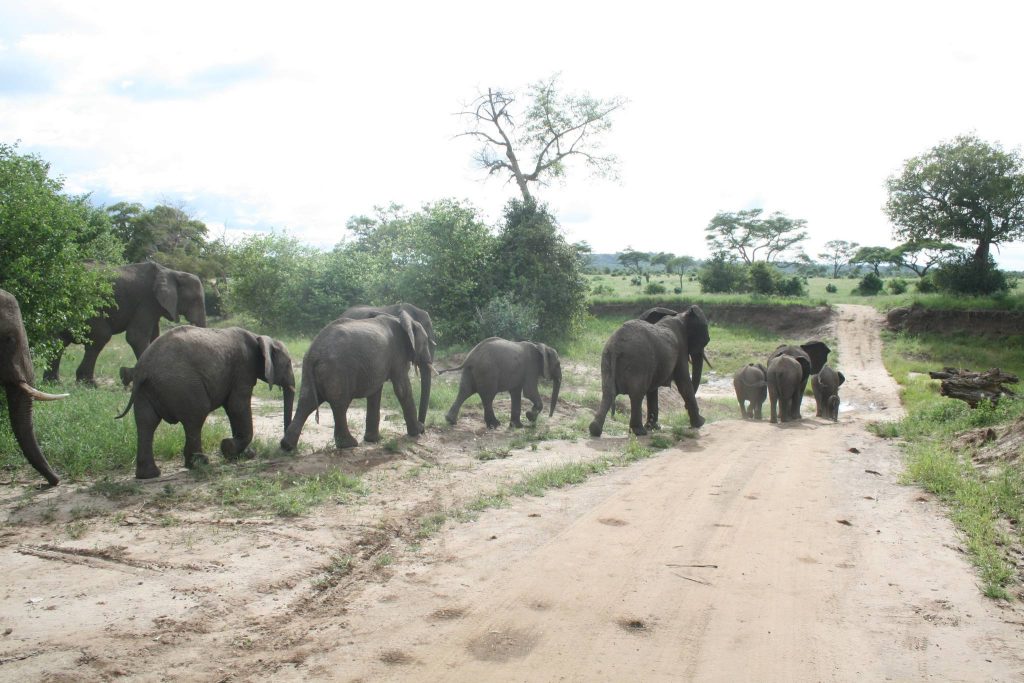
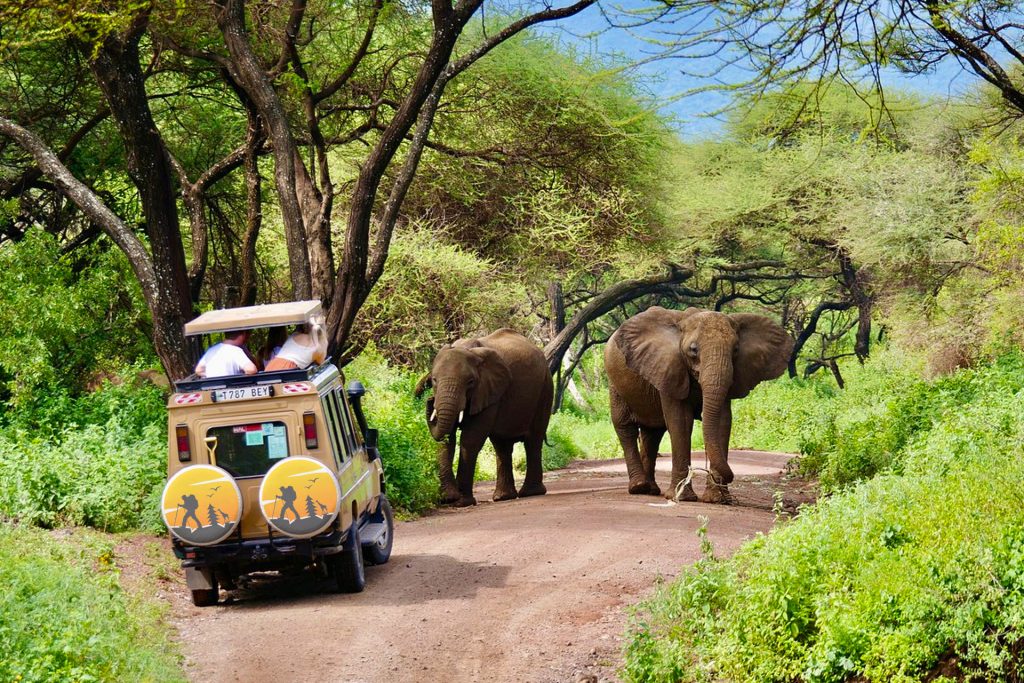
Elephants: Tanzania supports significant elephant populations, especially in Tarangire National Park, Ruaha National Park, and Nyerere National Park. Watching elephants gather around water sources or move through ancient baobab landscapes is a memorable safari experience.
Rhinoceroses: Black rhinoceroses are among Tanzania’s most threatened large mammals. The Ngorongoro Conservation Area is one of the country’s best-known locations for opportunities to see them in the wild, although sightings are never guaranteed.
Buffaloes: African buffaloes often gather in large herds and can be encountered in many of Tanzania’s major wildlife areas, including the Serengeti, Ruaha, and Nyerere ecosystems.
Seeing all five animals during a single safari is possible, but it depends on the locations visited, the length of the trip, and wildlife conditions.
Other Remarkable Wildlife – Wildlife and Migration in Tanzania
Tanzania offers much more than the Big Five. Visitors may encounter:
- Giraffes: Frequently seen browsing on acacia trees across savannah landscapes.
- Cheetahs: Fast predators that hunt in open grasslands, particularly in the Serengeti.
- Spotted hyenas: Intelligent and adaptable carnivores that play an important role in the ecosystem.
- Hippos: Commonly found in rivers, pools, and lakes where they spend much of the day in water.
- Nile crocodiles: Powerful reptiles found in rivers and waterways, including areas associated with the Great Migration.
- Zebras: Highly recognizable animals that often travel alongside wildebeest.
- Gazelles and antelopes: Important grazing species that support Tanzania’s predator populations.
- Wild dogs: Rarely encountered but fascinating predators found in parts of southern Tanzania.
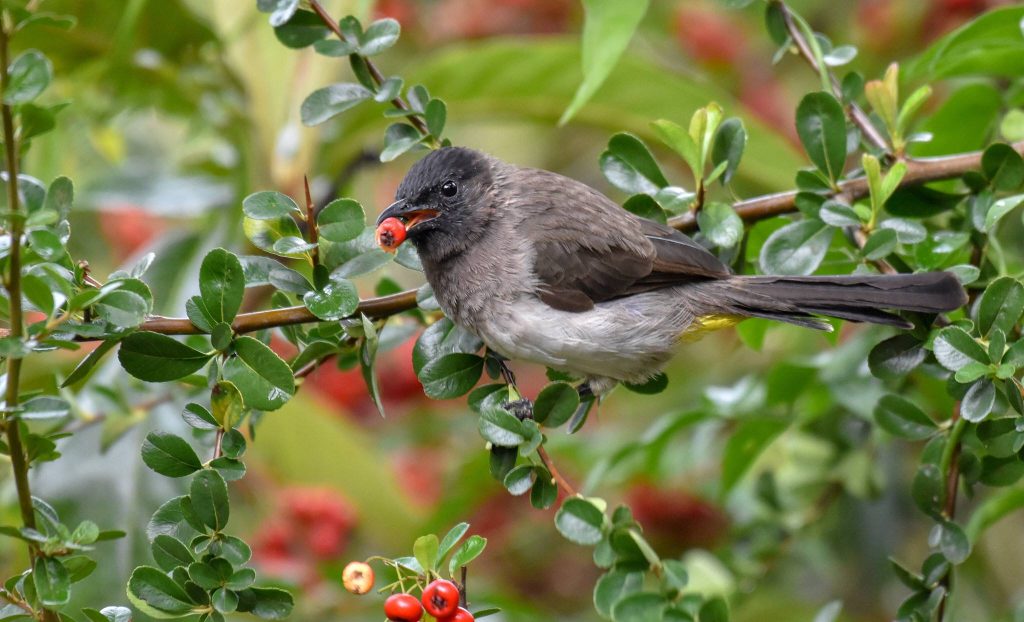
Tanzania is also an excellent destination for birdwatching, with flamingos, eagles, storks, hornbills, kingfishers, and many other resident and migratory birds.
2. The Great Wildebeest Migration in Tanzania -,Wildlife and Migration in Tanzania
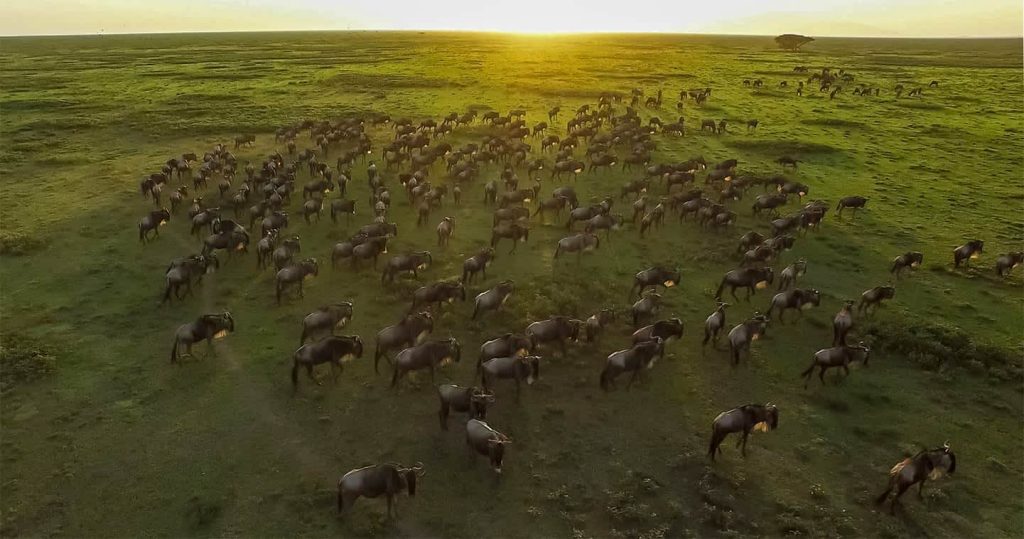
The Great Wildebeest Migration is one of the most famous wildlife spectacles on Earth. It is a continuous, seasonal movement of enormous herds across the Serengeti ecosystem in Tanzania and the Maasai Mara ecosystem in Kenya.
The migration involves approximately 1.5 million wildebeest, together with large numbers of zebras and gazelles. These animals move in response to rainfall, fresh grass, and the availability of water.
Rather than following a perfectly fixed route, the herds respond to changing environmental conditions. Their movements can vary from year to year, making every migration season different.
Why Does the Great Migration Happen?
The primary reason for the migration is the search for nutritious grass and water. Seasonal rainfall transforms dry plains into productive grazing grounds, allowing herbivores to feed and reproduce.
As conditions change, the animals move to areas where food and water are more readily available.
The migration also supports the wider ecosystem. Large herds provide food for predators and scavengers, while grazing influences vegetation and nutrient cycling across the landscape.
The Main Stages of the Migration – Wildlife and Migration in Tanzania
Although the migration continues throughout the year, several periods are especially popular with safari travelers.
December to March: Calving Season in the Southern Serengeti
During the short rainy season and the months that follow, many wildebeest gather on the short-grass plains of the southern Serengeti and the Ndutu area, which spans the Serengeti ecosystem and neighboring Ngorongoro Conservation Area.
This period is famous for wildebeest calving. Many calves are born within a relatively short period, giving visitors opportunities to observe newborn animals taking their first steps.
The abundance of young animals attracts predators such as lions, cheetahs, hyenas, and leopards. As a result, the calving season provides excellent opportunities to observe predator-prey interactions.
The green plains, dramatic skies, and large herds also create excellent conditions for wildlife photography.
April to May: Movement Through the Central and Western Serengeti – Wildlife and Migration in Tanzania
As the rains continue and grazing conditions change, many herds begin moving northwest through the Serengeti.
This period can bring impressive concentrations of wildebeest and zebras across the central plains and western corridor. Some groups move toward the Grumeti region, where rivers and woodland habitats create different wildlife-viewing opportunities.
Rainfall can make some roads muddy or difficult to navigate. However, travelers who plan carefully may enjoy rewarding sightings and a less crowded safari experience.
June to July: Western Corridor and Grumeti River Crossings
As the dry season develops, many herds move through the western Serengeti toward the northern part of the ecosystem.
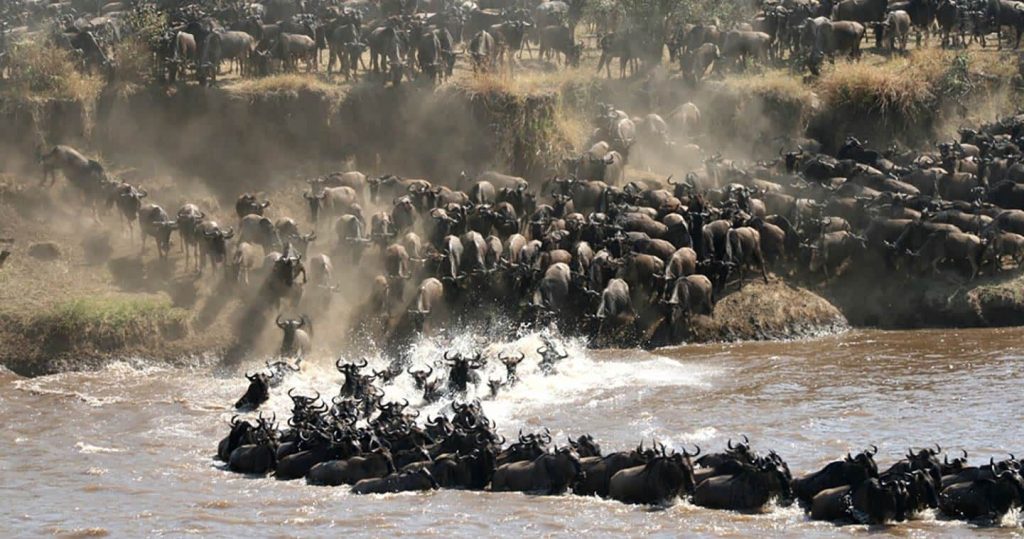
The Grumeti River is an important obstacle along some migration routes. Wildebeest must negotiate riverbanks and water channels where crocodiles may be waiting.
These crossings can be dramatic, but they do not happen at predictable times. Some herds may cross quickly, while others gather for hours or days before entering the water.
Travelers visiting during this period may also enjoy sightings of resident lions, elephants, giraffes, and other wildlife.
July to October: Northern Serengeti and Mara River Crossings – Wildlife and Migration in Tanzania
The northern Serengeti is one of the most popular places to experience the Great Migration during the dry season.
During this period, many herds move toward the Mara River system along the Tanzania-Kenya border. Some cross the river into Kenya’s Maasai Mara, while others remain in Tanzania or move back and forth depending on conditions.
Mara River crossings are among the migration’s most famous events. Large herds may gather on the banks before plunging into the water, facing strong currents, steep banks, and crocodiles.
However, river crossings are unpredictable. Visitors can spend several days in the region without witnessing one, so it is best to enjoy the entire wildlife experience rather than focus exclusively on a crossing.
November: Return Toward the Southern Plains
With the arrival of the short rains, many herds begin moving south again toward the Serengeti’s central and southern plains.
Fresh grass attracts the animals back toward their traditional calving areas, gradually beginning another cycle of the migration.
This movement provides opportunities to see large herds traveling across the landscape, although the exact timing depends on rainfall.
3. Best Places to Experience Wildlife and Migration in Tanzania
Tanzania has several outstanding national parks and conservation areas, each offering a different wildlife experience.
Serengeti National Park
The Serengeti is Tanzania’s most famous wildlife destination and the heart of the Great Wildebeest Migration.
Its vast savannahs, rocky outcrops known as kopjes, river systems, and open grasslands support large populations of predators and herbivores.
Visitors can look for lions resting on kopjes, cheetahs scanning the plains, leopards in riverine trees, and elephants moving through woodland areas. During migration season, huge herds of wildebeest and zebras can transform the landscape.
The Serengeti offers excellent wildlife viewing throughout the year, even when the migration is concentrated in another part of the ecosystem.
Ngorongoro Conservation Area – Wildlife and Migration in Tanzania
The Ngorongoro Conservation Area is famous for its spectacular volcanic landscapes and the Ngorongoro Crater, a vast volcanic caldera that supports a high concentration of wildlife.
The crater floor contains grasslands, wetlands, woodland patches, and a soda lake. These habitats attract lions, buffaloes, zebras, wildebeest, hippos, and many other species.
It is also one of Tanzania’s notable destinations for the endangered black rhinoceros.
Although the main migration herds do not remain inside the crater, the surrounding conservation area includes important grazing grounds, particularly around Ndutu during the calving season.
Tarangire National Park
Tarangire National Park is particularly well known for its elephants, ancient baobab trees, and seasonal concentrations of wildlife.
During the dry season, many animals gather around the Tarangire River and other remaining water sources. This creates excellent opportunities to observe elephants, zebras, wildebeest, giraffes, buffaloes, and predators.
Tarangire is not the principal destination for the Great Wildebeest Migration, but it is an outstanding addition to a northern Tanzania safari.
Lake Manyara National Park – Wildlife and Migration in Tanzania
Lake Manyara National Park offers a varied landscape that includes groundwater forests, open woodland, grassland, and the alkaline lake itself.
The park is known for its birdlife, including flamingos when conditions are suitable, as well as elephants, giraffes, baboons, and other wildlife.
Tree-climbing lions are associated with Lake Manyara, although seeing them in trees is not guaranteed.
The park is often included in northern circuit itineraries because it offers a different environment from the open plains of the Serengeti.
Ruaha National Park
Ruaha National Park is one of Tanzania’s largest national parks and is particularly appealing to travelers seeking remote wilderness and diverse wildlife.
The Great Ruaha River and surrounding habitats attract elephants, buffaloes, giraffes, antelopes, and numerous predators.
Ruaha is especially well known for its lions and its important populations of African wild dogs. It offers a different safari experience from the northern circuit, with fewer visitors in many areas and expansive, rugged landscapes.
Nyerere National Park – Wildlife and Migration in Tanzania
Nyerere National Park, part of the wider Selous ecosystem, is a major wildlife destination in southern Tanzania.
Its rivers, lakes, wetlands, and woodlands support elephants, hippos, crocodiles, giraffes, buffaloes, and a variety of predators.
The Rufiji River system is particularly important for wildlife, and some safari experiences include boat trips that provide a different perspective from traditional game drives.
Nyerere is not part of the main Serengeti-Maasai Mara migration route, but it is an excellent destination for travelers interested in broader wildlife exploration.
4. Wildlife Photography During the Migration
The Great Migration offers exceptional opportunities for wildlife photography because it combines enormous herds, dramatic landscapes, and frequent predator-prey interactions.
Photographers may capture newborn wildebeest on green plains, lions watching grazing herds, cheetahs moving through tall grass, or groups of zebras silhouetted against the sunset.
River crossings can produce spectacular photographs, but they are only one aspect of the migration. Herd movements, dust clouds, animal behavior, and interactions between species can be equally compelling.
For better results, consider the following tips:
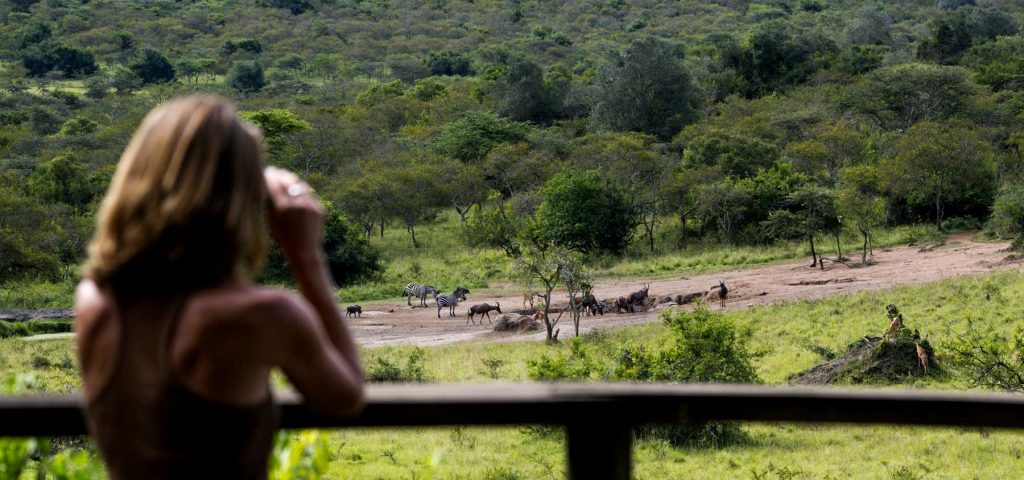
- Use a suitable telephoto lens: A zoom lens helps photograph distant animals without disturbing them.
- Take advantage of early mornings and late afternoons: Softer light often produces more attractive images and coincides with active wildlife periods.
- Be patient: Wildlife photography depends on timing, observation, and waiting for natural behavior.
- Follow your guide’s advice: Experienced guides understand animal behavior and can help position the vehicle safely.
- Respect wildlife distances: Never pressure animals or ask a driver to block their movement for a photograph.
- Protect your equipment: Dust, heat, and occasional rain can affect cameras and lenses.
A responsible approach helps protect wildlife while allowing photographers to enjoy natural encounters.
5. When Is the Best Time to Visit Tanzania for Wildlife and Migration?
The best time to visit depends on the wildlife experiences you want most.
| Period | Best experience | Main destination |
|---|---|---|
| December–March | Wildebeest calving and predator activity | Southern Serengeti and Ndutu |
| April–May | Green landscapes and seasonal herd movements | Central and western Serengeti |
| June–July | Dry-season wildlife viewing and possible Grumeti crossings | Western Serengeti |
| July–October | Northern herds and possible Mara River crossings | Northern Serengeti |
| November | Seasonal rains and southward herd movement | Central and southern Serengeti |
These are general seasonal patterns rather than guaranteed dates. Rainfall, grazing conditions, and local weather determine where the herds are found.
For travelers who want to see large concentrations of wildlife without concentrating exclusively on the migration, the dry season from approximately June to October is often a rewarding period for safari travel.
The green season can also be excellent, particularly for birdwatching, photography, calving-season experiences, and lush scenery.
6. How to Plan a Tanzania Wildlife Safari – Wildlife and Migration in Tanzania
Planning a successful safari begins with choosing the right destinations, travel dates, and itinerary.
Choose Your Safari Duration
The length of your trip determines how many ecosystems you can explore comfortably.
Three to four days: A short northern circuit safari may include Tarangire, Ngorongoro Crater, and a brief Serengeti visit, depending on travel arrangements.
Five to seven days: This allows more time in the Serengeti while combining it with destinations such as Tarangire or Ngorongoro.
Eight to ten days: A longer itinerary can explore different Serengeti regions and provide more flexibility for seasonal migration viewing.
Ten days or more: Travelers may combine the northern circuit with southern Tanzania, a cultural experience, or a relaxing beach holiday in Zanzibar.
Because the Serengeti is enormous, spending several nights in the appropriate region is often more effective than changing camps every day.

Choose the Right Accommodation – Wildlife and Migration in Tanzania
Tanzania offers several accommodation styles, including luxury lodges, permanent tented camps, mobile migration camps, and budget-friendly campsites.
Luxury lodges provide high levels of comfort, while tented camps offer a closer connection to the surrounding wilderness.
Mobile camps can be particularly useful for travelers who want to follow seasonal migration movements. Before booking, confirm the camp’s operating dates and location for your travel period.
Consider Transport Options
Most visitors explore national parks in a safari vehicle with an experienced guide. Road transfers are common, while domestic flights can reduce travel time between distant destinations.
Fly-in safaris are especially useful for travelers with limited time or those wishing to reach remote areas of the Serengeti.
When comparing safari packages, check whether park fees, accommodation, meals, transport, guide services, and airport transfers are included.
7. What to Pack for a Tanzania Wildlife Safari
Packing appropriately makes a safari more comfortable and enjoyable.
Recommended items include:
- Lightweight, breathable clothing in neutral colors.
- A warm jacket or fleece for cool early mornings.
- Comfortable walking shoes for approved activities.
- A wide-brimmed hat and sunglasses.
- Sunscreen and insect repellent.
- Binoculars for observing distant animals.
- A camera, spare batteries, and memory cards.
- A reusable water bottle.
- Personal medication and basic travel essentials.
- A small daypack for daily excursions.
A light rain jacket can be helpful during the rainy seasons. Travelers should also consult a qualified travel-health professional about recommended vaccinations, malaria prevention where applicable, and other health precautions before departure.
8. Responsible Wildlife Tourism in Tanzania – Wildlife and Migration in Tanzania
Wildlife tourism can support conservation and local livelihoods when it is managed responsibly.
Visitors can contribute by choosing reputable safari operators, following park rules, and respecting the animals they encounter.
Responsible safari practices include keeping a safe distance from wildlife, remaining inside the vehicle where required, avoiding littering, and never feeding wild animals.
Drivers should not chase animals, crowd river crossings, or obstruct the movement of herds. During sensitive events such as calving or hunting, giving wildlife space is particularly important.
Travelers can also support local communities by purchasing locally made products, using responsible community tourism experiences, and choosing operators that demonstrate a commitment to conservation.
These decisions help protect Tanzania’s natural heritage for future generations.
9. Combining Wildlife Safaris with Cultural Experiences
A safari in Tanzania can be enriched by learning about the people and traditions connected to its landscapes.
Depending on the location and the arrangements available, visitors may participate in guided cultural experiences with Maasai communities, learn about traditional pastoralist lifestyles, or explore local markets and villages.
In areas around Lake Eyasi, travelers may have opportunities to learn about the traditions of Hadza communities through appropriately arranged visits.
Cultural encounters should be respectful, locally led, and based on informed participation rather than treating communities as attractions.
For many travelers, these experiences provide a deeper understanding of the relationship between people, wildlife, land, and conservation.
10. Why Tanzania Is One of Africa’s Best Wildlife Destinations
Tanzania stands out because it combines extraordinary wildlife diversity with vast protected landscapes and seasonal natural events.
The Serengeti provides opportunities to experience the Great Migration and observe some of Africa’s most impressive predator populations. Ngorongoro offers remarkable wildlife viewing within a dramatic volcanic setting. Tarangire is renowned for elephants and baobabs, while Ruaha and Nyerere provide a more remote wilderness experience.
The country also offers flexibility for different types of travelers. Families, photographers, couples, birdwatchers, and experienced safari enthusiasts can all find experiences suited to their interests and budgets.
Another major advantage is the opportunity to combine a wildlife safari with Mount Kilimanjaro, cultural visits, or the beaches of Zanzibar.
From the movement of millions of wildebeest to the quiet sight of an elephant crossing a dusty track, Tanzania offers moments that remain memorable long after a journey ends.
Conclusion
Wildlife and migration in Tanzania represent some of the most extraordinary experiences available to nature lovers. The country’s national parks and conservation areas protect an exceptional variety of animals, habitats, and ecological processes, making Tanzania a leading destination for African safaris.
The Great Wildebeest Migration is a major highlight, with its changing seasonal movements, calving grounds, predator encounters, and dramatic river crossings. However, Tanzania’s appeal extends far beyond this single event. Its elephants, lions, leopards, rhinoceroses, giraffes, birds, and many other species make wildlife viewing rewarding throughout the year.
For the best experience, choose your travel dates according to your interests, allow sufficient time in the right regions, and work with a knowledgeable safari operator. Most importantly, approach every encounter with patience and respect for the natural environment.
Whether you dream of witnessing thousands of wildebeest crossing the plains, photographing lions in the morning light, or exploring remote wilderness far from crowded tourist routes, Tanzania offers an unforgettable opportunity to experience the beauty of Africa’s wildlife.